In order to provide detailed guidance on tax declaration and payment for household businesses (“HBs”) and individual businesses (“IBs”), the Government has issued Decree No. 68/2026/ND-CP on tax policies and tax administration applicable to these entities (“Decree 68”), effective from 5 March 2026.

Increase in taxable revenue threshold

One notable point under Decree 68 is the introduction of an annual revenue threshold of VND 500 million as the basis for determining tax obligations. Accordingly, HBs and IBs with annual revenue of VND 500 million or less are not subject to value-added tax (“VAT”) and personal income tax (“PIT”). Conversely, where revenue exceeds this threshold, HBs and IBs must fulfill their tax obligations in accordance with applicable regulations.

Tax calculation methods

For PIT purposes, Decree 68 provides for two (02) tax calculation methods. Specifically, the method of applying a deemed tax rate on taxable revenue applies to HBs and IBs with annual revenue exceeding VND 500 million up to VND 3 billion. Meanwhile, the method based on taxable income multiplied by the applicable tax rate applies to HBs and IBs with annual revenue exceeding VND 3 billion, as well as those with revenue from over VND 500 million up to VND 3 billion that opt to apply this method. Under the latter method, PIT is determined based on taxable income, i.e., revenue after deducting expenses related to business activities during the tax period.

Increased application of e-invoices

In addition to changes in tax calculation methods, Decree 68 strengthens tax administration through the application of e-invoices. Accordingly, HBs with annual revenue of VND 1 billion or more, or those whose VAT taxable revenue in the preceding year is below VND 1 billion but reaches VND 1 billion or more during the tax year, are required to use e-invoices bearing tax authority authentication codes or e-invoices generated from cash registers connected to the tax authority’s system. For those with annual revenue from over VND 500 million to below VND 1 billion, the use of e-invoices is encouraged depending on business needs.

Declaration of bank accounts used for business activities

Another new requirement under Decree 68 is that, from 5 March 2026, HBs and IBs must proactively declare to the tax authorities the bank accounts and e-wallets used for their business activities. This requirement aims to enhance transparency in revenue recognition and the management of cash flows arising from business operations. In practice, for ease of declaration, reconciliation, and tax administration, HBs and IBs should separate accounts used for business activities from those used for personal purposes.

Overall, Decree 68 represents a significant shift in the tax administration mechanism for HBs and IBs, marking a transition from a presumptive tax regime to a system based on actual revenue and e-invoice data. The establishment of the VND 500 million revenue threshold also reflects the authorities’ effort to balance state budget objectives with facilitating smaller-scale business operations. This can be seen as a necessary step toward enhancing transparency in the business environment and promoting more systematic and sustainable tax compliance.

In this context, HBs and IBs should consider the following key implications and actions:

  • Review revenue and accurately determine tax obligations

HBs and IBs should proactively monitor, record, and control their revenue to determine whether they fall within the VND 500 million threshold. Exceeding this threshold triggers VAT and PIT obligations; therefore, transparent revenue tracking systems are essential to avoid risks of tax reassessment and penalties.

  • Select an appropriate tax calculation method

For those with revenue from over VND 500 million to VND 3 billion, careful consideration should be given to choosing between the deemed tax rate method and the taxable income method. Where input costs are significant and supported by valid documentation, the taxable income method may help optimize tax liabilities.

  • Prepare infrastructure for e-invoices

The mandatory application of e-invoices for HBs with revenue from VND 1 billion requires early implementation of appropriate systems (including tax authority-authenticated e-invoices or cash register-based e-invoices connected to tax systems). Delays in implementation may result in business disruption or compliance risks.

  • Separate and transparently declare business accounts

The requirement to declare bank accounts and e-wallets used for business activities imposes an obligation to ensure transparency in cash flows. HBs and IBs should maintain separate accounts for business and personal purposes to facilitate declaration, reconciliation, and minimize the risk of incomplete revenue assessment by tax authorities.


This milestone not only affirms its outstanding academic capability, but significantly expands the high-quality international education map in the region.

Four international accreditations in 12 months

In Ho Chi Minh City’s international education landscape, authorisation to deliver the International Baccalaureate (IB) programme has long been considered a hallmark of academic excellence. However, attaining the status of a Full IB Continuum School–possessing the capacity to seamlessly implement all three core programmes from Primary Years, Middle Years, to the Diploma Programme–represents a far more rigorous echelon.

This is not merely a matter of adopting a curriculum; it is a profound systemic challenge where everything from educational philosophy and faculty proficiency to operational infrastructure must be harmonised.

Tesla Education achieves IB Continuum
Tesla Education has become the fifth institution in Ho Chi Minh City authorised to deliver the Full IB Continuum

The official award of the IB Diploma Programme certification in April 2026 marks the culmination of Tesla Education’s five-year standardisation journey. The milestone follows a rapid sequence of international accreditations secured within just 12 months: CIS (June 2025), Cambridge (July 2025), IB MYP (November 2025), and IB DP (April 2026).

This is no coincidence, but the result of a deliberate long-term strategy, underpinned by the consistent adoption and execution of the rigorous standards set by the International Baccalaureate Organisation and other leading global accreditation bodies.

Multi-tiered assurance

In an increasingly fluid world, students must combine a global outlook with the ability to adapt while remaining grounded in local values. Recognising that no single programme can fully deliver this, Tesla Education has developed a mutually reinforcing academic ecosystem, where leading international standards operate in tandem rather than isolation.

The IB Continuum serves as the backbone, shaping mindset and ensuring a coherent learning journey from Kindergarten to Grade 12. Alongside this, the Cambridge programme strengthens subject mastery, providing depth in core disciplines. While the IB is widely recognised for fostering critical thinking, independent inquiry, and global citizenship, Cambridge builds the academic rigour and subject-specific expertise sought by leading universities in the UK and the US.

.

Tesla Education achieves IB Continuum
The Full IB Continuum pathway creates a learning environment where students are not only equipped with knowledge, but also develop intellectual confidence and adaptability

In particular, the integration of the Ministry of Education and Training (MoET) core curriculum within this ecosystem is by no means a “regulatory concession,” but a deliberate, strategic choice. For Vietnamese families, the MoET framework is the anchor that keeps students connected to their mother tongue, history, and national culture. This parallel integration allows students to grow the wings of an international mindset, mastering future skills while retaining their local roots. They can flexibly transition their pathways, fully prepared to step out into the world yet entirely capable of contributing to their homeland.

Strategic location and pioneering financial approach

The introduction of a full IB Continuum at Tesla Education reshapes the decision landscape for parents in Ho Chi Minh City. With most IB Continuum schools clustered in the eastern and southern districts, areas such as Tan Binh, Phu Nhuan, and Binh Tan have lacked fully integrated international pathways. Tesla Education’s campus in Tan Binh helps close this gap, offering a more balanced distribution of access across the city.

Location plays a critical role in the long-term learning experience. Reducing daily travel in increasingly congested traffic can save students one to two hours a day, preserving energy and supporting both wellbeing and participation in extracurricular activities. For many families, this also removes a significant “hidden cost” associated with long commutes.

Tesla Education achieves IB Continuum
From “exclusive” to “accessible”: Tesla Education is expanding access to the International Baccalaureate pathway for Vietnamese families

This advantage is particularly valuable for expatriate communities surrounding Tan Son Nhat Airport. For the large population of South Korean and other expatriates, the demand for an accredited, familiar international curriculum is high. A localised IB Continuum school directly meets this elite demand, sparing families from exhausting cross-city logistics.

Beyond locational leverage, Tesla Education approaches the educational investment pragmatically. With overseas study costing $30,000 to $40,000 annually, a world-class domestic pathway is increasingly attractive. To commemorate the IB Continuum milestone, Tesla has launched a DP Scholarship Fund offering up to 90 per cent tuition coverage for outstanding Grade 10 students.

Reaching up to VND500 million ($19,000), this support makes an elite IB education remarkably accessible. This initiative democratises opportunities, signalling that international education is no longer an exclusive “luxury” but a strategic, long-term investment for modern families.

Ultimately, the synergy of a prime location, a standardised global academic framework, and agile financial policies positions Tesla Education as a masterstroke of strategy. Parents can now holistically optimise both educational quality and their children’s future investment journey.

Established in 2015 in Ho Chi Minh City, Tesla Education is a fully authorised IB Continuum World School, delivering a seamless International Baccalaureate journey from Early Years through High School. The institution pioneers a dual-pathway model that beautifully synergises the Vietnamese national curriculum with the globally renowned IB framework, placing a strong emphasis on science, technology, project-based inquiry, and holistic skill development.

For the current academic year, Tesla is proud to launch the Academic Excellence Scholarship for incoming Grade 10 students. Offering up to 90 per cent tuition coverage–equivalent to a maximum value of VND500 million ($19,000).

Discover more at: tesla.edu.vn

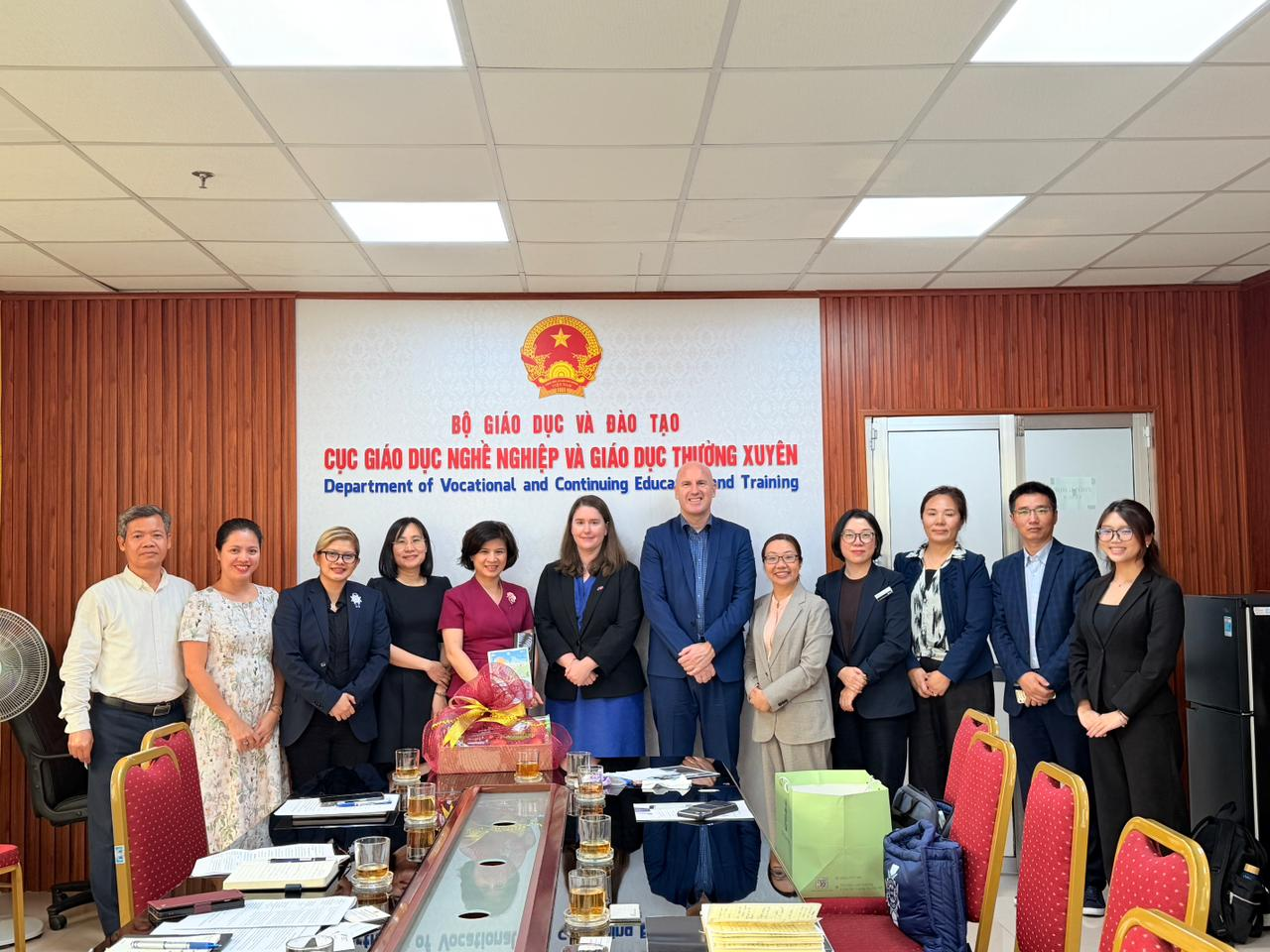
New Zealand institutes strengthen educational exchange and cooperation with Vietnam New Zealand institutes strengthen educational exchange and cooperation with Vietnam

A delegation of New Zealand Institutes of Technology & Polytechnics and Private Training Establishments made its first official visit to Vietnam from March 29 to April 5.

Vietnam and Queensland deepen education ties to power innovation Vietnam and Queensland deepen education ties to power innovation

On April 15, the National Innovation Centre (NIC) under the Ministry of Finance, in collaboration with Trade and Investment Queensland (TIQ), hosted the Education for Innovation Showcase in Hanoi, bringing together around 80 representatives from government agencies, universities, research institutes and businesses across Vietnam and Australia.

ACCA rolls out career workshops for Vietnamese students and teachers ACCA rolls out career workshops for Vietnamese students and teachers

The Association of Chartered Certified Accountants has held a workshop in Hanoi to help operationalise career guidance at school level following new regulatory direction.

On March 31, 2026, the Ministry of Science and Technology of Vietnam issued Circular No. 10/2026/TT-BKHCN, providing detailed guidance on the implementation of certain provisions of the Law on Intellectual Property and Decree No. 65/2023/ND-CP, as amended by Decree No. 15/2026/ND-CP, Decree No. 33/2026/ND-CP, and Decree No. 100/2026/ND-CP.

The Circular sets out detailed procedures relating to industrial property rights, including applications for inventions, industrial designs, layout designs, trademarks, and geographical indications. It also provides guidance on procedures for maintaining, renewing, amending, terminating, or invalidating protection titles, as well as procedures for assignment of industrial property rights.

In addition, the Circular regulates the filing and processing of complaints related to industrial property procedures, rules on authorization and representation, publication in the Industrial Property Official Gazette, recording in the National Register of Industrial Property, industrial property representation services, and the provision of industrial property information.

A notable aspect of the Circular is its detailed guidance on application requirements, filing methods, electronic filings, time-limit calculation, formal examination, substantive examination, publication, opposition, and related procedural matters. These provisions help clarify the practical implementation of Vietnam’s updated intellectual property legal framework.

Overall, Circular No. 10/2026/TT-BKHCN contributes to improving the transparency, consistency, and efficiency of industrial property administration in Vietnam. It is an important reference for individuals, businesses, IP representatives, and organizations involved in the registration, protection, management, and enforcement of industrial property rights.

Download the Full Documents Here

Download the English version here.

On March 31, 2026, the Government of Vietnam issued Decree No. 100/2026/ND-CP, amending Decree No. 65/2023/ND-CP on the implementation of several provisions of the Law on Intellectual Property concerning industrial property rights, protection of industrial property rights, rights to plant varieties, and state management of intellectual property.

The Decree provides further guidance for the implementation of Law No. 131/2025/QH15, particularly in relation to industrial property, intellectual property enforcement, plant variety rights, geographical indications, and administrative procedures. It addresses several important areas, including the establishment of industrial property rights for subject matters created with the use of artificial intelligence systems, the termination of the exercise of later-arising intellectual property rights where they conflict with earlier rights, and the management and commercial utilization of intellectual property assets.

A key feature of the Decree is its focus on digital transformation in intellectual property activities. It provides for the development of databases and shared digital platforms serving state management of intellectual property, including databases on industrial property, geographical indication management, intellectual property transaction prices, and protection of intellectual property rights. The Decree also recognizes electronic results of administrative procedures as having the same legal validity as paper-based results.

The Decree further introduces provisions on expedited substantive examination for certain invention and trademark applications, procedures for security control of inventions before filing abroad, registration of contracts for the transfer of rights to use industrial property subject matters, and re-issuance or issuance of duplicates of protection titles and related certificates.

In addition, the Decree strengthens the framework for geographical indication management, industrial property representation services, assessment of industrial property rights and plant variety rights, and the handling of goods bearing counterfeit trademarks. These amendments contribute to the modernization of Vietnam’s intellectual property system and support a more transparent, efficient, and digitally connected IP administration framework.

Download the Full Documents Here

Download the English version here.

Download the Vietnamese version here.

For the first time in 13 years, the Office of the United States Trade Representative (USTR) has placed a country in the “Priority Foreign Country” (PFC) category — the highest level of concern under the Special 301 Report. Vietnam is also the only country designated as PFC in 2026, marking a significant escalation in intellectual property and trade-related concerns between the two countries.

According to the 2026 Special 301 Report released on April 30, 2026, USTR determined that Vietnam has failed to provide adequate and effective protection and enforcement of intellectual property (IP) rights, while also failing to ensure fair and equitable market access for U.S. rights holders.

The Special 301 Report is an annual review conducted pursuant to Section 182 of the U.S. Trade Act of 1974 (19 U.S.C. § 2242). Under this framework, USTR identifies foreign countries that are considered to deny adequate and effective IP protection or fair market access to U.S. persons relying on intellectual property protection.

The 2026 review process included public submissions by January 28, 2026, submissions from foreign governments by February 11, 2026, a public hearing on February 18, 2026, and publication of the final report on April 30, 2026.

Three Levels of Classification under the Special 301 Report

The Special 301 framework classifies countries into three categories of concern.

The first is the “Watch List” (WL), which includes countries with ongoing concerns relating to IP protection, enforcement, or market access.

The second is the “Priority Watch List” (PWL), reserved for more serious concerns that often trigger intensified bilateral engagement and pressure for legal and enforcement reforms.

The highest category is “Priority Foreign Country” (PFC), applied to countries considered to engage in the most severe or egregious acts, policies, or practices affecting U.S. intellectual property rights, particularly where meaningful negotiations have not been pursued in good faith.

According to USTR, this is the first time since 2013 that a country has been designated as a PFC.

Five Main Grounds Cited by USTR

In this year’s report, USTR identified five principal reasons for elevating Vietnam directly from the Watch List to PFC status.

First, enforcement measures against online piracy were described as inconsistent and ineffective, despite previous actions against several major piracy platforms.

Second, anti-counterfeiting efforts and enforcement against trademark-infringing goods were deemed insufficiently robust.

Third, border enforcement measures relating to IP-infringing goods were considered ineffective.

Fourth, Vietnam was criticized for lacking effective enforcement mechanisms against the use of unlicensed software.

Fifth, USTR noted the absence of adequate criminal enforcement measures against cable and satellite signal theft.

Notably, in the 2025 Special 301 Report, Vietnam remained only on the Watch List. At that time, USTR acknowledged several positive developments, including enforcement actions against piracy websites such as “Xoilac,” “Fmovies,” and “Rophim.” However, the report also stated that there had been “little or no progress” on several longstanding concerns. The direct elevation to PFC status in 2026 suggests that the United States views prior warnings as having failed to produce sufficient practical results.

PFC Status Does Not Automatically Trigger Sanctions

Although highly significant, designation as a Priority Foreign Country does not automatically result in tariffs, sanctions, or immediate trade penalties.

The Special 301 Report is not a judicial ruling, nor is it a decision issued by the World Trade Organization (WTO) or any international tribunal. However, under U.S. law, USTR is generally required to initiate a Section 301 investigation within 30 days of a PFC designation, unless doing so would be detrimental to U.S. economic interests.

If such an investigation is initiated, USTR must request formal consultations with Vietnam. Should consultations fail to resolve the dispute, the United States may proceed with formal dispute settlement mechanisms or unilateral trade measures.

Under the statutory timeline, USTR typically reaches a determination within six months, although the process may be extended to nine months if the matter is particularly complex or if the designated country demonstrates significant progress.

Potential measures available to the United States following an adverse determination may include binding agreements, compensation demands, suspension of trade concessions, additional tariffs, import restrictions, or restrictions affecting services.

Vietnam Is the Only PFC Country in 2026

Vietnam is the sole country designated as a Priority Foreign Country in the 2026 Special 301 Report.

Countries placed on the Priority Watch List include Chile, China, India, Indonesia, Russia, and Venezuela.

Meanwhile, the Watch List includes Algeria, Argentina, Barbados, Belarus, Bolivia, Brazil, Canada, Colombia, Ecuador, Egypt, the European Union, Guatemala, Mexico, Pakistan, Paraguay, Peru, Thailand, Trinidad & Tobago, and Türkiye.

The Need for a Quantifiable Action Plan

Legal and policy observers suggest that Vietnam’s response should not focus solely on disputing the report’s findings, but also on demonstrating measurable enforcement outcomes and a credible reform roadmap.

Vietnam may need to develop a dedicated “Vietnam IP Enforcement Action Plan” with concrete benchmarks over 30-, 60-, 90-, and 180-day periods, specifically targeting the five issues identified by USTR.

In parallel, regular publication of enforcement data is likely to become increasingly important, including statistics relating to administrative, civil, and criminal actions; border control measures; e-commerce and livestream enforcement; online piracy; unlicensed software use; and international cooperation.

More broadly, strengthening IP protection should not be viewed merely as compliance with U.S. demands. If implemented effectively, it could serve as an opportunity to modernize Vietnam’s IP enforcement system, improve the business environment, enhance investor confidence, and better protect Vietnamese enterprises and creators in the digital economy.

The full details of the USTR’s Special 301 Report in English are here: 2026 Special 301 Report

On May 5, 2026, the Prime Minister issued Official Dispatch No. 38/CD-TTg on directing the urgent and decisive implementation of measures to combat, prevent, and handle acts of intellectual property rights infringement. The dispatch was issued in the context of increasingly complex IP infringement activities across various sectors and localities, affecting the investment and business environment as well as the lawful rights and interests of individuals, enterprises, and relevant organizations.

Under the dispatch, the Prime Minister requests ministries, ministerial-level agencies, local authorities, and functional forces to strengthen coordination and mobilize resources to inspect, detect, prevent, and strictly handle acts of intellectual property infringement. Key areas of concern include copyright and related rights infringement, trademark counterfeiting, goods infringing industrial property rights, violations in the digital environment, and infringements involving television signals, films, music, video games, and other digital content.

The dispatch assigns specific responsibilities to relevant authorities, including the Ministry of Public Security, Ministry of National Defence, Ministry of Culture, Sports and Tourism, Ministry of Industry and Trade, Ministry of Finance, Ministry of Foreign Affairs, Ministry of Science and Technology, and People’s Committees of provinces and centrally-run cities. In particular, the Ministry of Science and Technology is assigned to take the lead and coordinate with relevant agencies in implementing assigned tasks, consolidating information, and providing timely guidance for handling arising issues.

Following Official Dispatch No. 38/CD-TTg, the Ministry of Science and Technology issued Official Letter No. 288/BKHCN-SHTT dated May 6, 2026, providing guidance on reporting requirements. Accordingly, ministries, sectors, and local authorities are required to submit daily quick reports from May 7, 2026, and a consolidated report on the results of the intensive implementation period, ensuring that information is complete, accurate, timely, and properly reflects the nature of each case.

The issuance of the dispatch and the reporting guidance demonstrates the Government’s strong direction in enhancing the enforcement of intellectual property rights, protecting the lawful interests of rights holders, consumers, and businesses, and contributing to a transparent, healthy, and internationally aligned business environment.

Download the Full Documents Here

Download Official Dispatch No. 38/CD-TTg of the Prime Minister here.

Download the reporting guidance issued by the Ministry of Science and Technology here.

The 2026 Special 301 Report, published by the Office of the United States Trade Representative (USTR), provides an annual review of intellectual property protection and enforcement among U.S. trading partners. The report highlights global developments, market access issues, enforcement challenges, and country-specific concerns relating to intellectual property rights.

In the 2026 report, USTR identifies Vietnam as a Priority Foreign Country, marking the first time in thirteen years that a country has been placed in this category. According to the report, this identification is based on long-standing concerns regarding intellectual property protection and enforcement in Vietnam.

The report outlines several key areas of concern, including online piracy, counterfeit goods, border enforcement, unlicensed software use, and cable and satellite signal theft. USTR states that these issues have affected U.S. copyright-related industries, brands, and other IP-reliant sectors.

At the same time, the report also acknowledges certain enforcement actions taken in Vietnam, including actions against piracy-related platforms and continued engagement between Vietnam and the United States on intellectual property matters. USTR indicates that it will continue to engage with Vietnam and may consider further actions under Section 301 of the Trade Act of 1974.

Overall, the 2026 Special 301 Report provides an important reference for understanding international intellectual property enforcement trends, with particular attention to Vietnam’s current position in the U.S. trade and IP policy framework.

Download

Download the full report here.

Summary

This document is the consolidated English version of the Criminal Code of Viet Nam, issued under Consolidation Document No. 135/VBHN-VPQH dated September 5, 2025 by the Office of the National Assembly of Viet Nam. The Criminal Code No. 100/2015/QH13, effective from January 1, 2018, has been amended by Law No. 12/2017/QH14, the Law on Juvenile Justice No. 59/2024/QH15, and Law No. 86/2025/QH15 on amendments to a number of articles of the Criminal Code.

The Criminal Code sets out the legal framework for determining crimes, criminal liability, penalties, judicial measures, and the handling of criminal offences in Viet Nam. It applies to individuals and, in specific cases, commercial legal entities that commit criminal offences as prescribed by law.

The Code provides fundamental principles on the basis of criminal liability, classification of crimes, age of criminal responsibility, intentional and unintentional crimes, preparation for crimes, attempts, complicity, concealment of crimes, and cases where criminal liability may be exempted. It also regulates the effect of the Criminal Code on offences committed within and outside the territory of Viet Nam.

In relation to penalties, the Criminal Code provides primary and additional sentences applicable to individuals, including warning, fine, community sentence, expulsion, determinate imprisonment, life imprisonment, and death sentence. It also sets out penalties applicable to commercial legal entities, such as fines, suspension of operation, permanent shutdown, prohibition from operating in certain fields, and prohibition from raising capital.

The Code further regulates judicial measures, sentencing principles, mitigating and aggravating circumstances, sentence reduction, suspended sentences, conditional parole, deferment or suspension of imprisonment, conviction expungement, and criminal liability of commercial legal entities.

Overall, the Criminal Code serves as a core legal instrument in Viet Nam’s criminal justice system, providing the basis for crime prevention, criminal prosecution, sentencing, enforcement, and protection of the lawful rights and interests of individuals, organizations, and the State.

Download

Download the full English version here.

Download the full Vietnamese version here.

Summary of Law No. 131/2025/QH15 on Amendments to the Law on Intellectual Property

Law No. 131/2025/QH15, passed by the National Assembly of Viet Nam on December 10, 2025 and effective from April 1, 2026, introduces important amendments to the Law on Intellectual Property. The Law updates several key areas, including copyright and related rights, industrial property rights, plant variety rights, intellectual property management, commercialization, digital transformation, artificial intelligence, online infringement handling, and enforcement mechanisms.

One of the notable updates is the recognition of intellectual property issues arising from artificial intelligence systems. The Law authorizes the Government to provide detailed regulations on the establishment of intellectual property rights where intellectual property subject matters are created using AI systems. It also allows the use of lawfully published and publicly accessible texts and data for scientific research, experimentation, and AI training, provided that such use does not unreasonably prejudice the lawful rights and interests of authors and intellectual property right holders.

The Law further strengthens the policy framework for the creation, protection, management, valuation, and commercial exploitation of intellectual property rights. Intellectual property right holders are encouraged to use IP rights in civil, commercial, investment, credit, and other lawful activities. The Law also supports the use of IP rights for capital contribution, licensing, assignment, mortgage, and other commercial purposes, helping intellectual property become a more practical asset in business and innovation activities.

In relation to state management, the Law emphasizes the development of a comprehensive and effective intellectual property ecosystem. It requires the State to ensure funding, infrastructure, facilities, equipment, and other necessary resources for intellectual property management activities. In addition, the Law introduces provisions on digital transformation in intellectual property activities, including the development of digital infrastructure, online public services, digital platforms, databases on IP protection, databases on IP transaction prices, and the application of automation, big data, and artificial intelligence to improve efficiency and transparency.

For copyright and related rights, the Law clarifies several issues concerning copyright registration, related rights registration, re-granting, replacement, and annulment of certificates. Authors, copyright owners, and related rights owners are responsible for the accuracy of information provided in registration applications. The Law also updates provisions concerning computer programs, backup copies, online platform-based software services, and copyright or related rights created using state budget funding.

Regarding industrial property rights, the Law introduces important procedural changes for inventions, industrial designs, trademarks, geographical indications, and layout designs. Applications may be filed in paper or electronic form via the electronic filing system. The Law clarifies application requirements, filing dates, publication timelines, formal examination, substantive examination, opposition procedures, complaint mechanisms, and accelerated substantive examination for certain invention and trademark applications. It also provides clearer rules on the novelty and industrial applicability of industrial designs, including designs of non-physical products in cyberspace.

The Law also amends provisions relating to trademarks and geographical origin signs. Signs indicating the geographical origin of goods or services, particularly those of Viet Nam, are subject to stricter conditions unless they have been widely used and recognized as trademarks or are elements of collective marks or certification marks as provided by law.

For plant variety rights, the Law updates rules on the right to register plant varieties, especially in cases involving science, technology, and innovation tasks using the state budget. It also revises procedures concerning application filing, technical testing, appraisal timelines, grant of plant variety protection certificates, and maintenance fee payment.

A major enforcement-related update concerns intellectual property rights in cyberspace. The Law expands the responsibilities of intermediary service providers and digital platform operators in protecting intellectual property rights online. It also allows competent authorities to apply measures such as removal, concealment, or disabling access to infringing information, content, accounts, websites, applications, or Internet address identifiers.

The Law also strengthens civil remedies for intellectual property infringement. Where material damage cannot be determined based on specific legal grounds, the Court may decide compensation depending on the extent of damage, but the amount must not exceed VND 1 billion. For moral damage, the Court may award compensation from 10 to 100 times the statutory pay rate, depending on the seriousness of the damage.

Overall, Law No. 131/2025/QH15 represents a significant step in modernizing Viet Nam’s intellectual property legal framework. It reflects the growing importance of digital transformation, artificial intelligence, commercialization of intellectual property assets, online enforcement, and the effective management of IP rights in the context of innovation-driven economic development.

Download the full content here:

English vesion

Vietnamese version

Specifically, the Department of Vietnam Customs issued Official Dispatch No.15912/CHQ-GSQL to regional customs sub-departments on enhancing oversight of rare earth export activities.

The directive comes amid broader government efforts to tighten management of mineral resources, particularly high-value strategic minerals.

Under the new requirements, customs authorities will only process export procedures for rare earth products that fully meet conditions and have legally verified origins in accordance with governmental Decree No.17/2020/ND-CP, and are included in export lists issued periodically by the Ministry of Industry and Trade or otherwise approved by competent authorities in special cases.

Full inspections mandated as Vietnam moves to control rare earth exports
Vietnam is expected to issue a national rare earth strategy in 2026

Decree 17 dated February 2020 on amending a number of articles of decrees concerning business investment conditions in sectors under the management of the Ministry of Industry and Trade.

At the customs declaration stage, enterprises must provide complete and detailed information on mineral names, quality standards, mine origin, and the entities responsible for extraction and processing.

In cases where trading companies are not directly involved in extraction or processing, they must supplement information on domestic purchase contracts and invoices. Details of mining licences, recovery permits, or export authorisations must also be fully declared.

Notably, the Department of Vietnam Customs requires physical inspection of all rare earth export shipments, except for certain specific cases.

Inspections will be conducted based on risk management principles, combined with verification against product categories and quality standards set by the Ministry of Industry and Trade.

Where sufficient grounds for determination are lacking, customs authorities will take samples for assessment by accredited conformity assessment organisations.

Inspection results will serve as the basis for customs clearance decisions or legal handling. Customs units are also required to strengthen information collection and analysis on rare earth exporters, and promptly place high-risk cases under post-clearance audit.

The Department of Vietnam Customs has instructed all units to strictly implement the directive and publicly post its contents at customs clearance points for enterprises to follow. Any implementation issues must be promptly reported for guidance and resolution.

According to the Ministry of Agriculture and Environment, Vietnam possesses substantial rare earth potential, with reserves ranked among the top two or three globally and distributed across 21 cities and provinces.

The Ministry has largely completed baseline surveys of rare earth-bearing areas, is maintaining strict oversight, and is drafting a national rare earth strategy expected to be issued in early 2026.

Rare earths were for the first time incorporated into the Law on Geology and Minerals, which was passed by the National Assembly in November 2024 and took effect from July 2025.

An amended law, adopted in December 2025, affirms rare earths as specially important strategic minerals, requiring strict control over exploration, extraction and processing, while prohibiting the export of unprocessed rare earth ores.

Experts propose development direction for rare earth industry Experts propose development direction for rare earth industry

Vietnam has the world’s second-largest reserves of rare earths – an estimated 22 million tonnes – yet the resources have remained untapped, scientists have said.

South Korea's Trident obtains rights to rare earth mines in Vietnam South Korea’s Trident obtains rights to rare earth mines in Vietnam

Trident Global Holdings, a prominent South Korea-based conglomerate with interests in mining, real estate, and carbon capture technology, has acquired rights to three significant rare earth element mines in Vietnam.

Vietnam yet to tap rare earth resources Vietnam yet to tap rare earth resources

Vietnam boasts a large reserve of approximately 30 million tonnes of rare earth, but the country has yet to conduct thorough research about how to exploit and process it effectively.