The proposal calls for the expansion of 18 component projects along the expressway, a vital artery for the nation’s economy.

The Ministry of Construction has submitted a report to Prime Minister Pham Minh Chinh and Deputy Prime Minister Tran Hong Ha, proposing for expanding key sections of the Eastern North-South Expressway under Public-Private Partnership (PPP) model. 

The proposal calls for the expansion of 18 component projects along the expressway, a vital artery for the nation’s economy.

This work is part of a national goal to complete 3,000 km of expressways by 2025 and is considered essential to support ambitious economic targets, including 8% GDP growth or highter in 2025 and annual double-digit growth in the 2026-2030 period.

While the ministry had initially recommended using public funds to allow for immediate implementation and avoid project delays, Government leaders have now directed the ministry to study the feasibility of leveraging private investment through the PPP method.

Upon completion of all component projects, toll collection will be implemented on all sections, including those built with public funds, in accordance with National Assembly resolutions.

To ensure seamless and efficient operation across the entire route, the Ministry plans to select investors using a combined approach. The strategy will prioritize a blend of Operate & Manage (O&M) and Build-Operate-Transfer (BOT) models.

Under an O&M contract, the state funds the investment and hires a private firm to operate and maintain the project. In contrast, the BOT model allows a private investor to directly fund construction and operate the road for a specific period to recoup their investment capital before transferring it back to the State.

Electronics remains a pillar, accounting for 57% of the country’s total export turnover.

Electronics remains a pillar of Vietnam’s export economy, representing approximately 57% of total export turnover, according to the latest report on “Electronics FDI Sector Ahead of Reciprocal Tariffs’ Effects” released by FiinRatings.

Electronics sector encompasses key product categories such as computers; electronic products and components; mobile phones and parts; cameras, camcorders, and accessories; machinery and spare parts; as well as electrical wires and cables.

The top 48 FDIs in the field of electronics are responsible for around 70% of the country’s electronics export turnover, in which Samsung-related entities contributing 30%, followed by Apple’s supplier network with 9%.

The report also suggests opportunity to reshape Vietnam’s electronics supply chain, which currently reveals a substantial reliance on imports, with less than 1% of input value sourced from domestic suppliers, while 15% from FDI satellite firms, and the remainder fully imported. 


Vietnam’s target of high and sustainable growth to take it to the ranks of high-income countries demands the right policy vision from the outset.

Vietnam has set out an ambitious development roadmap, aiming for GDP growth of 8 per cent in 2025 and moving towards double-digit growth during the 2026-2030 period. Looking even further ahead, the country envisions joining the group of upper-middle-income economies by 2030 and ascending to the ranks of high-income nations by 2045. These are not merely growth estimates; they vividly reflect a strong aspiration to rise, showcasing a strategic vision, effective governance, and consistency in macro-economic policy management.

To realize these high and sustainable economic growth targets, Vietnam will need to adopt a development mindset that is flexible, innovative, and breakthrough-oriented.

Three scenarios

According to analysis by a research team from the National Economics University (NEU), there are three potential economic growth scenarios for Vietnam to 2045. Each represents a distinct development pathway, with varying levels of risk and corresponding policy requirements for the country to achieve high economic growth.

The first scenario – Scenario A – follows a “Fast Start” model, designed to generate a significant boost in the early stages to rapidly scale up the size and position of the national economy. Vietnam’s GDP is projected to grow at an average annual rate of 11 per cent from 2025 to 2029, then taper off to 9 per cent annually between 2030 and 2037, and finally stabilize at 7-8 per cent annually from 2038 to 2045. However, experts caution that this model carries the risk of overload in the initial years, which could lead to “burnout” if not supported by flexible adjustments and substantial resources.

The second scenario – Scenario B – adopts a “Prolonged Acceleration” model. This path maintains a high growth rate of 11 per cent annually for a longer period (2025-2031), then gradually decreases to 8.5-9 per cent (2032-2038) and 6.5-7.5 per cent (2039-2045). Economists note that this approach helps distribute growth pressure more evenly over time, allowing better policy and investment preparation. However, it faces the challenge of sustaining strong and stable growth momentum over an extended period.

The third scenario – Scenario C – follows a “Growth Wave” model. Vietnam’s economic growth is segmented into clearly defined “phases”: 2025-2030 is a preparatory phase, with growth of 8-10 per cent annually; 2031-2035 is an acceleration phase, reaching 11-12 per cent; followed by 8.5-9 per cent during 2036-2040; and, finally, 6.5-7.5 per cent from 2041-2045. Many experts consider this scenario the most feasible, as its growth pace aligns with natural development cycles and reduces the risk of “growth shocks”.

Notably, under Scenario C, Professor Tran Thi Van Hoa from the NEU believes the goals outlined are entirely achievable provided that Vietnam rigorously implements institutional reforms, comprehensively invests in strategic infrastructure, enhances workforce quality, and accelerates the application of advanced technologies across all economic sectors. If these conditions are fully met, Vietnam could reach per capita income of $28,370 by 2045, marking its transition into the group of high-income countries.

Strategic pathways

Vietnam achieving its ambitious economic growth targets will not be without challenges. In addition to internal issues such as workplace productivity, institutional quality, and business competitiveness, the country is also facing significant external pressures from global shifts, including geopolitical tensions, policy changes by major economies, global supply chain disruptions, and growing demands for green development, digital transformation, and energy security.

To navigate these challenges, Vietnam must adopt a development strategy that is both flexible and long-term. Relying on outdated growth models based on resource exploitation, cheap labor, and excessive public investment is no longer viable.

Professor Hoa argues that an economy aiming for high-income status must move away from traditional paths. The key lies in deep reforms to both institutions and development policies. Regarding institutions, it is essential to streamline organizational structures, ensure transparency in responsibilities, and enhance the legal framework to support the digital economy, innovation, and emerging business models. Flexible experimental mechanisms, such as industry-specific sandboxes, should also be implemented to suit local conditions.

Additionally, FDI needs to be more selective, focusing on high-tech sectors and ensuring technology transfer, workforce training, and partnerships with domestic enterprises to upgrade local value chains. Investing in digital infrastructure, particularly advanced technologies like AI, the Internet of Things (IoT), and big data, should be a strategic priority to drive breakthroughs in productivity and efficiency. “These are the core factors that will help Vietnam break through, not only in growth speed but also in the quality and sustainability of long-term development,” Professor Hoa said.

Dr. Dang Thi Thu Hoai, from the Institute for Policy and Strategy Studies, believes that although innovation has contributed to Vietnam’s economy in recent years, its overall effectiveness is still not clearly visible. To improve the quality of its growth, Vietnam needs to implement a synchronized set of key solutions. The first focus should be on boosting productivity in the private sector, which plays a central role in the economy. The second focus should be improving intra-sector productivity. Lastly, enhancing regional connectivity and investing in infrastructure are fundamental. “Investing in infrastructure and reorganizing provincial administrative units will optimize resource allocation and create a more efficient, sustainable growth model,” Dr. Hoai said.

Investment focus on key areas

Adding another perspective on policies for achieving high and sustainable economic growth in the years ahead, Dr. Nguyen Bich Lam, former Director General of the General Statistics Office (now the National Statistics Office at the Ministry of Finance), emphasized that effectively utilizing public investment resources is crucial for the economy’s recovery and long-term development.

While accelerating public investment in infrastructure is essential, this alone is not enough to ensure sustained growth. Without close integration with policies that support production and enhance domestic business capacity, public investment’s spillover effects will be limited, and maintaining high growth will be challenging.

Moreover, if public investment is scattered and lacks strategic focus, its effectiveness will be low, leading to wasted resources. Dr. Lam believes Vietnam must prioritize areas such as integrated logistics infrastructure, digital transformation in both the public and private sectors, clean energy development, and the growth of manufacturing. These are key for public investment to drive sustainable growth in the years ahead.

Improving workplace productivity is critical for long-term growth, but relying solely on human labor is insufficient.

Associate Professor Pham The Anh from the NEU suggested that Vietnam could learn from the successful strategies of rapidly-developing economies like Japan, South Korea, Singapore, and China. These countries focused on key industries, supported by strong policies in taxation, credit, and business reforms.

Additionally, these nations have a flexible approach to macro-economic management, effectively controlling inflation, maintaining fiscal discipline, stabilizing exchange rates, and restructuring their economies to adapt to global shifts. They also attract FDI to promote industrialization and expand exports. Infrastructure investment remains a foundation for long-term competitive advantage. “Vietnam can apply these international lessons by creating a structured industrial development strategy, focusing on key sectors, and ensuring a consistent and cohesive policy system,” Associate Professor Anh concluded. “This will be key to breaking through in growth, achieving high rates while ensuring quality and sustainability in the future.”


“Strengthening public investment in infrastructure is the right move, but it’s not enough. Without accompanying investments in production development and support for businesses, sustaining growth momentum will be difficult.”

Dr. Nguyen Bich Lam, former Director General of the General Statistics Office (now the National Statistics Office at the Ministry of Finance)


“An economy aiming for high-income status must move away from traditional paths. The key lies in deep reforms to both institutions and development policies.”

Professor Tran Thi Van Hoa from the National Economics University (NEU)
 

The project has total investment capital of $193 million with a capacity of 120 million ceramic products annually.

Authorities of the central province of Thanh Hoa have granted investment certificate for Lares Pte. Ltd of Singapore to build an ASEAN Vietnam Ceramic Valley project at Van Thang Yen Tho Industrial Cluster.

The project will cover over 322,345 sq.m in Nong Cong and Yen Tho communes.

The project has estimated investment capital of more than VND5.1 trillion ($193 million) and a capacity of producing 120 million ceramic products per year, including household and industrial ceramics.  

The project implementation will be divided into three phases. The first is scheduled for completion in the second quarter of 2027 with an estimated investment capital of over $84.6 million, while the second is expected to be completed in the third quarter of 2028 with an estimated investment capital of more than $100.1 million. The third is planned for completion in the second quarter of 2030 with investment capital of around $4.3 million.

The investor will contribute over VND1.02 trillion ($38.7 million), while the rest will be mobilized from different legal sources.


The figure was revealed at a press meeting chaired by the National Statistics Department under the Ministry of Finance to announce Vietnam’s socioeconomic statistics for the second quarter and the first half of 2025 on July 5 in Hanoi.

The fresh data shows that despite ongoing global economic challenges, the country’s industrial sector has maintained strong momentum.

Specifically, the industrial production index (IIP) for Q2 is estimated to have grown by 10.3 per cent on-year, with the manufacturing and processing sector expanding by 12.3 per cent.

Strong industrial performance fuels economic momentum amid headwinds
The Industrial production index saw a sharp jump in many localities, with pre-merger Phu Tho province taking the lead at 46.6 per cent

Overall, for the first half of 2025, the IIP rose by 9.2 per cent on-year- outperforming the 8 per cent hike seen in the same period of 2024 and marking the most significant increase since the start of the decade.

Between 2020 and 2025, the on-year growth in the six-month IIP was as follows: 2.8 per cent in 2020, 9.0 per cent in 2021, 8.4 per cent in 2022, contracted 1.4 per cent in 2023, resuming 8.0 per cent growth in 2024, and 9.2 per cent growth in 2025.

The manufacturing and processing sector remains the primary growth engine, registering an 11.1 per cent increase in H1 of 2025 compared to a 8.9 per cent hike in the same period last year, contributing 9.1 percentage points to overall IIP growth.

Meanwhile, the electricity production and distribution sector rose by 4.5 per cent, adding 0.4 percentage points, and the water supply, waste management and wastewater treatment sector increased by 11.3 per cent, contributing 0.2 percentage points.

Notably, the positive growth trend was widespread. Along with this, after six months, 62 out of 63 localities. prior to the recent administrative merger, reported an on-year increase in their industrial production indices.

The only exception was Ba Ria-Vung Tau province (now part of Ho Chi Minh City), which saw a 2.6 per cent decline.

Several provinces posted particularly strong gains thanks to a robust performance in manufacturing and electricity-related industries.

Phu Tho’s manufacturing sector surged by 46.6 per cent in the first half of the year, followed by Nam Dinh at 33 per cent, Bac Giang 27.5 per cent, Thai Binh 25.3 per cent, Ha Nam 22.8 per cent, and Vinh Phuc 18.8 per cent.

The slower industrial growth in Ba Ria-Vung Tau weighed on the gross regional domestic product (GRDP) of the newly expanded Ho Chi Minh City (post-merger with Binh Duong and Ba Ria-Vung Tau provinces), which grew by only 6.56 per cent in the first half of 2025. The GRDP of pre-merger Ho Chi Minh City was 7.82 per cent.

Regarding the national industrial production picture, the National Statistics Department highlighted several key products that recorded sharp growth in the first half of 2025 compared to the same period in 2024.

These include automobiles, which grew 70.2 per cent; televisions, up 21.9 per cent; NPK compound fertiliser, up 18.9 per cent; liquefied petroleum gas (LPG), up 16.9 per cent; casualwear, up 14.9 per cent; cement, up 14.8 per cent; leather footwear, up 14.3 per cent; and steel bars and angles, up 13.9 per cent.

The consumption index for the manufacturing and processing sector in June rose by 0.6 per cent on-month, and by 10.1 per cent on-year.

For the first six months of 2025, the sector’s consumption index increased by 9.8 per cent compared to the same period in 2024.

However, the average inventory rate across the manufacturing and processing sector reached 85.7 per cent in the first half of 2025, higher than the 76.9 per cent hike recorded in the same period last year.

The higher inventory level could potentially impact the operational efficiency and profitability of manufacturing businesses.

At the press meeting on July 5, Nguyen Thi Huong, director general of the National Statistics Department, noted that Vietnam’s economy and society would continue to face significant challenges in the latter half of the year.

“Given Vietnam’s high degree of economic openness, the country remains vulnerable to unpredictable global developments.

“To achieve the 2025 growth target of 8 per cent and beyond, there must be concerted efforts from the entire political system, the government, businesses, the public, and support from the international community.

All levels and sectors need to bolster forecasting and scenario planning, adopt flexible and responsive policy measures, and remain steadfast in the dual goals of stimulating growth while ensuring macroeconomic stability, inflation control, social welfare, and improved living standards,” Huong stressed.

Exporters pivot to Middle East amid global trade shifts Exporters pivot to Middle East amid global trade shifts

Amid rising global trade tensions and shifting market dynamics, Vietnamese firms are increasingly turning to the Middle East as a promising alternative for sustainable export growth.

Tra Vinh gains momentum as regional economic bright spot Tra Vinh gains momentum as regional economic bright spot

Despite undergoing administrative streamlining in preparation for potential provincial mergers, Tra Vinh province continues to stand out as a stable economic performer in the Mekong Delta region.

Vietnam ranks among most cost-competitive locations on global industrial map Vietnam ranks among most cost-competitive locations on global industrial map

Vietnam ranks among the most cost-competitive locations on the global industrial map, despite a 70 per cent increase in rents, according to Cushman & Wakefield.

KUALA LUMPUR, MALAYSIA – Media OutReach Newswire – 9 July 2025 – National payments network, Payments Network Malaysia Sdn Bhd (PayNet), has teamed up with top Asian payment platforms, Alipay+, and Weixin Pay (commonly known in Malaysia as “WeChat Pay”), to drive Chinese and regional tourist spending across Malaysia. As the summer travel season begins, both Alipay+ and Weixin Pay are rolling out targeted campaigns to promote Malaysia as a top destination. The campaigns will boost cross-border spending via PayNet’s DuitNow QR ecosystem and make travel in Malaysia more seamless and rewarding for visitors.

Connecting Tourists with Malaysian Businesses Tourists using AlipayCN, Alipay+ partner payment apps, and Weixin Pay can pay with ease in Malaysia by scanning DuitNow QR – no extra apps needed. It’s the same e-wallet they use at home, accepted at more than 2.5 million merchants in Malaysia. From restaurants and hotels to souvenir kiosks and tour operators, this enhanced interoperability makes travel hassle-free. It also increases visibility for merchants, helping micro, small and medium enterprises (MSMEs) tap into tourist spending. Alipay+ currently enables 15 international payment apps in Malaysia, including Alipay for Chinese tourists. During the December 2024 travel peak, Alipay+, via DuitNow QR, drove a six-fold revenue increase for Malaysian merchants’ year-on-year.
“This is what smart tourism looks like, seamless for travellers, transformative for our MSMEs. By enabling tourists to use their home wallets via DuitNow QR, we are opening up more than 2.5 million Malaysian businesses, many of them small and family-run, to global spending power. It’s a digital solution with real-world economic impact,” said PayNet Chief Marketing Officer, Gary Yeoh.
Empowering MSMEs, Strengthening the Economy
This multi-partner initiative aims to increase sales by 20% for participating merchants during the summer campaign period. In the long run, the campaign underpins Malaysia’s goal of becoming a cashless tourism leader, while helping more businesses tap into digital payments.
Tourism Malaysia Director General, Datuk Manoharan Periasamy, highlighted that the summer campaigns play a vital role in reaching the target of six million Chinese tourist arrivals this year. “We believe that making travel simple, welcoming, and convenient is the key to attracting more visitors,” he said. “With DuitNow QR accepted via Alipay+ and Weixin Pay, tourists can enjoy a smoother, more enjoyable travel experience. This initiative not only adds comfort and familiarity for our guests but also creates meaningful opportunities for local businesses and boosts the overall tourism economy”.
China Summer Campaign Highlights
PayNet, Alipay+, and Weixin Pay are launching three targeted campaigns that reward spending, celebrate local experiences, and deepen tourism-driven economic impact:

Partner Campaign Details
Alipay+ Lucky Draw: Win a Premier League Football Experience

  • From 26 June to 14 July, Chinese and regional travellers¹, who spend at DuitNow QR merchants via AlipayCN and Alipay+ partner payment apps, stand a chance to win an all-expense paid trip to Hong Kong to catch Arsenal vs Tottenham Hotspur.
  • Two winners, each with one guest, will receive tickets to the football match on 31 July, round-trip flight tickets, and a three-day, two-night luxury hotel stay.
  • For specific campaign details, refer to the AlipayCN or Alipay+ partner payment apps apps. T&Cs apply.
Spend and Save: Eat, Play & Save

  • Running from 15 June to 30 September, this campaign rewards AlipayCN and Alipay+ payment partner users with generous discounts as they explore Malaysia’s diverse F&B scene and tourist attractions.
  • For specific campaign details, refer to the AlipayCN or Alipay+ partner payment apps. T&Cs apply.
Weixin Pay Collect Badges, Get Rewards

  • From 15 July to 15 September, Weixin Pay users can enjoy a fun, interactive experience that rewards spending in Malaysia through a collectible badge campaign. With each DuitNow QR transaction, users earn a unique badge featuring Malaysian cultural elements, which can be redeemed into discount coupons.
  • In addition to the campaign, Weixin Pay users also benefit from year-round preferential foreign exchange rates when making purchases via DuitNow QR in Malaysia.
  • For specific campaign details, refer to Weixin’s Mini Program (微信支付全球有礼). T&Cs apply.

As tourist arrivals to Malaysia continue to grow, the partnership between PayNet, Alipay+, and Weixin Pay showcases the power of digital payments to fuel economic growth. In line with this momentum, the target for 2025 is to increase DuitNow QR transactions through Alipay+ and Weixin Pay by more than 130% year-on-year.
By empowering local businesses and simplifying how tourists pay via trusted mobile payment methods, this summer campaign marks a meaningful step forward in strengthening Malaysia’s tourism economy and boosting regional economic integration.
¹Tourists using Alipay+ from the countries listed below are eligible to participate in the contests:
Alipay (China), AlipayHK (Hong Kong SAR, China), MPay (Macao SAR, China), TrueMoney, Kbank (Thailand), Changi Pay (Singapore), Hipay (Mongolia), HelloMoney, GCash (Philippines), Tinaba (Italy), Kaspi (Kazakhstan), BigPay (Singapore, Thailand), Kakao Pay, Naver Pay, and Toss (South Korea).
https://www.paynet.my/

The issuer is solely responsible for the content of this announcement.

BANGALORE, INDIA – Media OutReach Newswire – 9 July 2025 – Arrow Electronics, a global provider of technology solutions, today announced the launch of its new Engineering Solutions Center(ESC) in Bangalore, India. This expansion reinforces Arrow’s commitment to making critical technologies such as AIoT, edge computing, intelligent sensing more accessible, while strengthening the engineering capabilities of domestic technology manufacturers across key sectors including industrial, automotive and transportation, energy management, and aerospace and defense in India, Southeast Asia, South Korea, and Japan.

India and several Southeast Asian countries are rapidly emerging as pivotal hubs for technology manufacturing, driven by global supply chain diversification and supportive domestic policies. The newly established India ESC is designed to help innovators and technology manufacturers adopt advanced technologies such as edge computing, energy management, automation, and e-mobility. The center aims to accelerate the development and deployment of next-generation intelligent and connected products—bringing them to market faster and more cost-effectively.
“Innovators across the region often face challenges in adopting cutting-edge electronic components and software technologies due to limited in-house engineering capabilities for rapid product development,” said Dr. Raphael Salmi, president of Arrow Electronics’ components business for South Asia, Korea, and Japan. “By leveraging our global network of resources, deep engineering expertise, and strong local presence, Arrow acts as a trusted technology partner—bridging the gap between innovation and execution.”
Arrow’s ESC offers comprehensive design engineering expertise across every stage of the product development lifecycle. Staffed by a sizable team of highly skilled application engineers with deep expertise in embedded software, wireless connectivity, power and analog technologies, and IP&E (Interconnect, Passive & Electromechanical) components, the center provides tailored engineering support to accelerate innovation and reduce time to market.
Key areas of support include:

  • Component Engineering: Expert guidance on technology selection for MCU/MPU/FPGA, SoC, wireless connectivity, power & analog , and IP&E components
  • System Engineering: In-depth system-level design reviews, block diagram validation, and bill-of-materials (BOM) optimization
  • Reference Design Solutions : Serve as a technical backbone by offering system level reference design to accelerate customer’s time-to-market and enhancing customers confidence in designing our products.

The resources also encompass in-market expertise, technical training, ready-to-use software, component samples, along with world-class supply chain services—all aimed at accelerating the journey from ideation to design to impact. For more information, visit: https://www.arrow.com/en/tools-and-resources.

The issuer is solely responsible for the content of this announcement.

UOB: Exports frontloading boosts second quarter's performance
Source: UOB

The Statistics Office under the Ministry of Finance on July 5 showed that Vietnam’s real GDP growth pace rebounded sharply to 7.96 per cent on-year in Q2, well ahead of Bloomberg estimates of 6.85 per cent and UOB’s calls of 6.1 per cent, and from a revised 7.05 per cent in Q1. In the first half of 2025, Vietnam’s economy expanded 7.52 per cent on-year, its best performance in the first half based on data available since 2011.

The strong performance came largely on the back of frontloading of export orders as companies placed orders in the 90-day window when President Trump paused “reciprocal tariffs” with a baseline rate of 10 per cent. In the first half of the year, Vietnam’s exports rose by 14.4 per cent on-year (to $219 billion), while imports surged by 17.9 per cent on-year (to $212 billion), keeping pace with the expansion of 14 per cent and 16 per cent, respectively, in 2024.

Computers and electric products remained the largest exports item in the first half, which surged 42 per cent on-year to $47.7 billion. This was followed by mobile phones, and machinery and equipment. These three categories accounted for about 46 per cent share of total exports during the period, underscoring Vietnam’s dependence on those sectors. Vietnam recorded a trade surplus of $7.63 billion in the first half (lower compared to $11.6 billion in the same period last year).

Manufacturing PMI (Purchasing Managers Index) data shows that the manufacturing sector has yet to return to the expansion zone (above 50) in any meaningful way. While the PMI index improved to 48.9 in June from the slump in April (45.6) as uncertainty diminished over US trade tariffs, Vietnam has reported only one reading that is above 50 this year (March), and the index has been in contraction zone (below 50) in six out of the last seven readings. This suggests the outlook may not be as bright as the Q2 GDP data shows, as manufacturing activity remains constrained, especially by declines in new orders.

Vietnam attracted an estimated $11.7 billion in realised foreign direct investment (FDI) in the first half of 2025, an 8.1 per cent on-year increase and the highest six-month figure since 2021. Manufacturing and processing remains the top sector, receiving $9.56 billion and accounting for 81.6 per cent of total realised FDI. This was followed by real estate. Total newly registered FDI reached $21.52 billion in the first half, a gain of 32.6 per cent on-year. The strong registered capital momentum will bode well for the pipeline of realised, or actual, FDI flows in the months ahead.

After rising for three consecutive years (to $25.4 billion in 2024), the government has set targets for realised FDI of $27-28 billion in 2025, and aims to attract $38-40 billion of renewed (or registered) FDI this year after attracting $38.2 billion in 2024. However, against a backdrop of global trade tensions and the trade tariffs that will be in place, these targets appear to be ambitious as companies assess their plans in response to global evolution trade dynamics.

UOB: Exports frontloading boosts second quarter's performance

For Vietnam, the relief is that Trump declared on July 2 a 20 per cent tariff on Vietnam’s imports to the US, with a 40 per cent tariff on transshipments. While significant, this is well below the initial 46 per cent tariff rate announced on April 2, and will come as a relief to exporters.

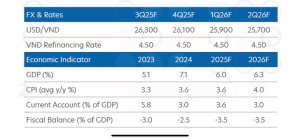
UOB has revised upward the forecast for Vietnam’s GDP growth in 2025 by 0.9 per cent to 6.9 per cent. UOB is pegging growth projections for Q3 and Q4 of around 6.4 per cent. Under these conditions, realised FDI flows should reach around $20 billion this year.

Tariff risks continue to weigh on economic outlook Tariff risks continue to weigh on economic outlook

United Overseas Bank (UOB) has maintained its forecast for Vietnam’s economic growth in 2025 at 6 per cent, and believes that the State Bank of Vietnam will hold steady rates due to tariff risks from the United States.

Vietnamese firms stepping up amid US tariff challenges Vietnamese firms stepping up amid US tariff challenges

The majority of Vietnamese businesses expect intra-ASEAN trade to grow following the announcement of US tariffs, according to the 2025 UOB (United Overseas Bank) Business Outlook Study released on June 25.

UOB spurs ASEAN cross-border connections with signing of MoUs UOB spurs ASEAN cross-border connections with signing of MoUs

In a significant move to bolster regional economic integration and facilitate foreign direct investment (FDI), UOB has signed five MoUs with government agencies and leading industry players in ASEAN and Greater China.

At last week’s Green Industry Forum in Hanoi, Nguyen Ba Hung, chief economist at the Asian Development Bank (ADB) in Vietnam, said that many countries have already succeeded in pursuing economic growth while cutting emissions.

“This affirms the feasibility of achieving both high growth and emissions reduction,” he said. “We are living in an era of growth. Green development is opening up significant opportunities. However, we must also acknowledge the accompanying risks and challenges.”

Hung questioned whether Vietnam is truly committed to joining this global trend. “By issuing its national strategy on green growth, the government has clearly expressed its intentions. However, to realise them, Vietnam must invest in green technologies, transform its business models, and revise its national growth approach – from enterprise level to macroeconomic scale,” he said.

While some businesses acknowledged the pressure and difficulties of adopting sustainable practices, they also demonstrated pioneering efforts, proactively choosing green transformation as a long-term strategy.

Nguyen Thi Phuong Thao, sales director at Garment 10 Corporation JSC, said the company embarked on its sustainability journey due to market demands and Vietnam’s net-zero commitment by 2050, as well as by the internal awareness of businesses.

“Without green transformation, it is difficult to integrate internationally and maintain our position in the global supply chain. Moreover, corporate responsibility for the environment and society is essential,” Thao said.

In the steel sector, Pham Cong Thao, deputy general director of VnSteel, noted that export markets were likely to exert the greatest pressure for change.

Vietnam currently exports around 13 million tonnes of steel annually, with 40 per cent going to developed economies – approximately 27 per cent to the EU and 13 per cent to the United States.

“The EU has implemented strict rules on imports, such as the Carbon Border Adjustment Mechanism, which will take effect in 2026. Only businesses that comply will be able to compete. Those that do not will have to find new markets,” he said.

He added that government regulations were also intensifying pressure on businesses to transition. In the plastics industry, Hoang Duc Vuong, chairman of VietCycle, said that exported plastic products must now contain at least 30 per cent recycled materials, a figure that will rise to 35 per cent by 2028. “In particular, plastic products like garbage bags exported to the EU must contain up to 70 per cent recycled plastic pellets. To meet this, the plastics industry must adapt and invest in upgrading its technology,” Vuong said.

As a result of such pressures, several companies have already begun their transition. Nguyen Thi Phuong Thao of Garment 10 described the corporation’s five-year green journey, which started with sourcing sustainable materials such as organic cotton and recycled inputs.

“We have invested in rooftop solar systems that generate millions of kilowatt-hours, and we have replaced coal-fired boilers with biomass alternatives, reducing thousands of tonnes of CO2 emissions annually,” she said.

Nguyen Phuong Nga, deputy general director of CNCTech Group, said over 70 per cent of the group’s partners come from markets with strict environmental standards, making compliance essential for securing its role in the global supply chain.

“Green transformation is a prerequisite for attracting high-quality investors from Europe and the United States. To welcome these global players, we need smart, green industrial parks and fully integrated ecological zones,” she said.

“Green growth has a direct impact on a business’s strategy. By investing early in both technology and infrastructure, and maintaining a long-term vision, companies can reduce production costs and meet their partners’ standards,” Nga added. “Sustainability today is not only about environmental responsibility – it is also key to securing a place in global supply chains.”

On a macroeconomic level, Hung from the ADB noted that traditional economic growth was once associated with greater resource exploitation and environmental degradation – a model no longer sustainable given its long-term costs.

“The goal of green growth is to maintain high economic expansion while progressively reducing resource consumption and limiting environmental damage,” he said. “For instance, even if the economy doubles in size, the increase in resource use should be limited to 20–30 per cent, thanks to improved technology, production innovation, and greater efficiency.”

He described this as a shift from a linear growth model to a circular economy, from development involving trade-offs to development without trade-offs.

“From an environmental perspective, this new growth approach allows not only for damage mitigation but also for positive environmental contributions, such as through waste treatment and reduced air pollution using green technologies,” he said.

Hung concluded that once an economy crosses the transition threshold, it can simultaneously raise incomes and lower environmental impacts, creating a strong foundation for green growth.

“Vietnam is nearing this threshold, entering the upper middle-income stage, with per capita income estimated at $4,000–4,500 per year. This suggests that, with the right policies, technologies, and investment conditions, Vietnam is close to entering a phase of green and sustainable development,” he said.

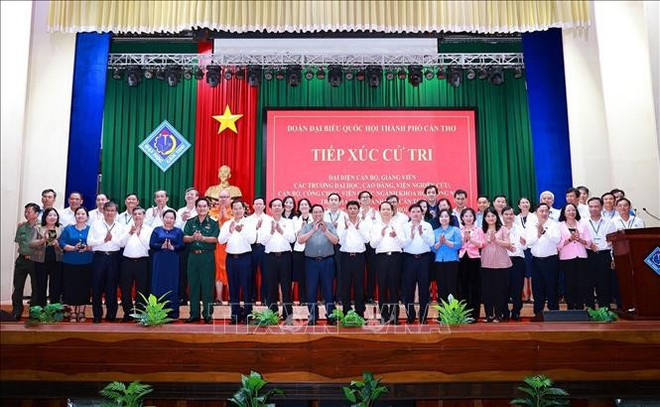
Can Tho (VNA) – Prime Minister Pham Minh Chinh and the delegation of National Assembly (NA) deputies of Can Tho city on July 13 held a meeting with local voters, including lecturers, researchers, civil servants and staff from universities, colleges and scientific institutions across the city.

This marked the third voter meeting of the city’s delegation of NA deputies following the 9th session of the 15th NA, and notably, the first thematic session focusing on science and technology.

It was also the PM’s first voter engagement in Can Tho since the administrative merger of former Can Tho city with Hau Giang and Soc Trang provinces.

The meeting drew over 1,000 participants, including academics, postgraduate students, civil servants, and technology professionals. Delegates briefed constituents on the outcomes of the 9th NA session, which concluded after 35 days of rigorous discussion. The session saw the adoption of 34 laws, 14 legal resolutions and reviews of six draft bills. Significantly, the legislature passed a resolution amending several articles of the 2013 Constitution.

The NA also approved shortening the current legislative term and local council tenures (2021–2026) and confirmed that the general election for the next term will take place on Sunday, March 15, 2026.

Currently, the Can Tho NA deputy delegation has 21 members, including PM Chinh and NA Chairman Tran Thanh Man.

uuidf632a1a0-6f1c-40e1-9b35-b912dc865912code001library1type1mode1loctruecaptrue.jpg
Prime Minister Pham Minh Chinh and delegates at the meeting (Photo: VNA)

The delegation reported on local implementation of national policies related to science, technology, innovation, and digital transformation, particularly the rollout of Resolution 57-NQ/TW of the Politburo dated December 22, 2024.

At the meeting, voters raised various concerns, including issues related to scientific funding, commercialisation of research, digital skills development, and the need to retain talent within the national science and technology ecosystem. The PM and senior officials responded to these concerns, outlining measures to remove financial bottlenecks, reform research grant mechanisms, and boost private and social sector participation in innovation.

PM Chinh underscored the importance of increasing science and technology spending, from 3% of the state budget this year to 5% next year, along with tax incentives, preferential credit, visa facilitation, and housing policies for overseas Vietnamese experts.

He noted that priority will be given to developing high-quality human resources for emerging sectors such as semiconductors and AI, protecting intellectual property, and creating favourable conditions for collaboration between the “four pillars” of scientific research – government, academia, business, and the public.

The PM highlighted recent national achievements, including sustained political stability, social security, and economic growth. Vietnam’s GDP is projected to top ASEAN and rank among the world’s fastest-growing economies.

The Government’s push to eliminate substandard housing, particularly for policy-beneficiary households, is also expected to reach its targets ahead of schedule.

He also pointed to the smooth operations of the new two-tier local government model.

Praising Can Tho’s growing contributions to national development, the Government leader called for the city to lead in all key areas, particularly in science, technology, innovation, and digital transformation.

He urged the city to revive the stalled Can Tho Oncology Hospital project, accelerate the 1-million-hectare high-quality, low-emission rice programme for the Mekong Delta, and support digital education initiatives like “Digital Literacy for All”.

He encouraged Can Tho University to form digital transformation support teams to assist local communities and take the lead in human capital development for the semiconductor industry and the digital economy./.

VNA