On 7 August 2025, the Government issued Decree No. 219/2025/ND-CP (“Decree 219”) on foreign employees working in Vietnam, replacing Decree No. 152/2020/ND-CP. The new Decree 219 is aimed at streamlining procedures and attracting more foreign experts, while maintaining stricter standards in certain areas.

A key reform under Decree 219 is the relaxation of experience requirements for expert positions. Foreign employees with a university degree or higher are now required to have only two years of relevant experience, instead of three as previously mandated. For degree holders in government-prioritized fields—such as finance, technology, innovation, and digital transformation—the requirement is further reduced to just one year.

Decree 219 also broadens the scope of exemptions from work permit requirements. Foreigners working in priority sectors, once confirmed by the relevant ministry or provincial authority, are no longer required to obtain a work permit but only need to file for confirmation of exemption eligibility.

Another major change is the integration of procedures for determining the demand for foreign workers and applying for a work permit. Previously, employers had to complete these steps separately, resulting in a statutory timeline of 15 working days. Under Decree 219, the process has been consolidated into a single step with a total processing time of 10 working days.

In contrast to these simplifications, Decree 219 introduces stricter rules on health certificates. Only certificates issued by medical institutions in countries or territories that have mutual recognition agreements with Vietnam will be accepted for work permit applications, replacing the previous general recognition of foreign certificates issued within 12 months.

Overall, Decree 219 reflects Vietnam’s effort to make its labor market more open and competitive for foreign professionals, while ensuring higher standards in health and compliance. The changes are expected to ease administrative burdens for businesses, shorten timelines, and create more favorable conditions for highly skilled foreigners to work in Vietnam.

On 17 July 2025, the National Assembly released the Draft Personal Income Tax Law (“Draft”), introducing substantial policy changes intended to align with Vietnam’s broader reform agenda and the rapid transformation of the global economy. If adopted, the new law would reshape the scope of taxable income, revise tax brackets, and adjust key deductions, reflecting both fiscal and social policy objectives.

One of the most notable proposals is the expansion of taxable income categories to capture emerging asset classes and transactions that had previously fallen outside the tax regime, resulting in revenue leakage. Under the Draft, income from the transfer of Vietnam national internet domains, emission reduction certificates, carbon credits, green bonds, automobile license plates obtained via auction (together with the associated vehicles), and digital assets—including virtual and tokenized assets—would become taxable. While most such income would be taxed at 5% on the portion exceeding VND 10 million, digital asset transfers would instead be subject to a flat 0.1% levy on transaction value.

The Draft also seeks to restructure the personal income tax schedule by reducing the number of brackets from seven to five, thereby simplifying the regime. Two alternative schedules have been proposed, both maintaining a progressive structure but adjusting the thresholds for middle- and high-income earners. The Ministry of Finance is currently seeking public feedback on which schedule should be adopted.

In recognition of inflationary pressures and the need to support households, the Draft proposes to increase family circumstance deductions. Taxpayers could claim up to VND 15.5 million per month (VND 186 million annually), while deductions for each dependent would rise to VND 6.2 million per month. This adjustment is intended to ease the financial burden on employees, boost disposable income, and stimulate domestic consumption.

Another key proposal relates to real estate transfer taxation. Where purchase price, sale price, and related expenses are verifiable, taxable income would be subject to a rate of up to 20%. In cases where these figures cannot be determined, tax would be calculated based on the holding period of the property. A progressive approach is suggested, with shorter holding periods (under two years) taxed at higher rates—up to 10% of transfer value—to discourage speculative transactions and stabilize the property market.

At this stage, all provisions remain proposals. The Ministry of Finance, in coordination with the Government, will continue to study, refine, and collect feedback from stakeholders before finalizing the law. These reforms, if adopted, would not only expand Vietnam’s tax base but also promote equity, support living standards, and help guide sustainable economic development.

In line with the Politburo’s Resolution No. 83-KL/TW dated 21 June 2024 on wage reform, the Government has submitted to the National Assembly for consideration the Draft Decree on Minimum Wages for Employees Working under Labor Contracts (“Draft”). Once adopted, the Draft will replace Decree No. 74/2024/ND-CP, which has been in effect since 1 July 2024.

The Draft proposes a 7.2% increase in regional minimum wages, raising monthly levels to VND 5,310,000 for Region I, VND 4,730,000 for Region II, VND 4,140,000 for Region III, and VND 3,700,000 for Region IV. This adjustment continues the Government’s policy of gradually improving employees’ living standards while ensuring wage growth keeps pace with socio-economic development.

In addition to the increase in wage levels, the Draft introduces an important structural change regarding the applicable scope of minimum wage areas. Following the restructuring of administrative units in July 2024, the classification will now be based on commune-level divisions rather than district-level divisions, thereby ensuring greater accuracy and consistency in the application of regional minimum wages.

The wage reform is expected to deliver tangible benefits for employees by raising incomes and supporting quality of life, while also contributing to broader social stability. For enterprises, however, the proposed increase will necessitate a careful review of payroll budgets, cost structures, and financial planning. Businesses are advised to prepare an adjustment roadmap in advance to ensure compliance and maintain operational efficiency.

On 14 August 2025, the Department of Home Affairs of Ho Chi Minh City issued Official Letter No. 1351/SNV-LDTLBHXH, providing guidance on the submission and management of enterprises’ Internal Labor Rules and Collective Labor Agreements under the city’s newly implemented two-tier local government model.

The Official Letter clarifies the allocation of authority for dossier registration and management. Foreign-owned companies are required to submit to the Department of Home Affairs of Ho Chi Minh City. Companies operating in export processing zones and industrial parks must submit to the Management Board of Export Processing and Industrial Zones. All other companies should file with the Division of Culture and Society under the commune/ward People’s Committee where their head office is located.

Enterprises may submit dossiers either directly or through the online public service portal, with electronic submission strongly encouraged as a means of reducing time and costs. The statutory processing timeline remains unchanged under the Labor Code 2019, i.e., no more than seven working days from the date of receipt of a valid dossier.

With this reallocation of responsibilities, enterprises should ensure that their dossiers are submitted to the correct authority to avoid delays or rejections. Companies are also advised to review the current status of their Internal Labor Rules and Collective Labor Agreements to ensure timely registration or amendment. In practice, businesses should be mindful that commune-level officials under the Division of Culture and Society may still be gaining familiarity with these procedures.

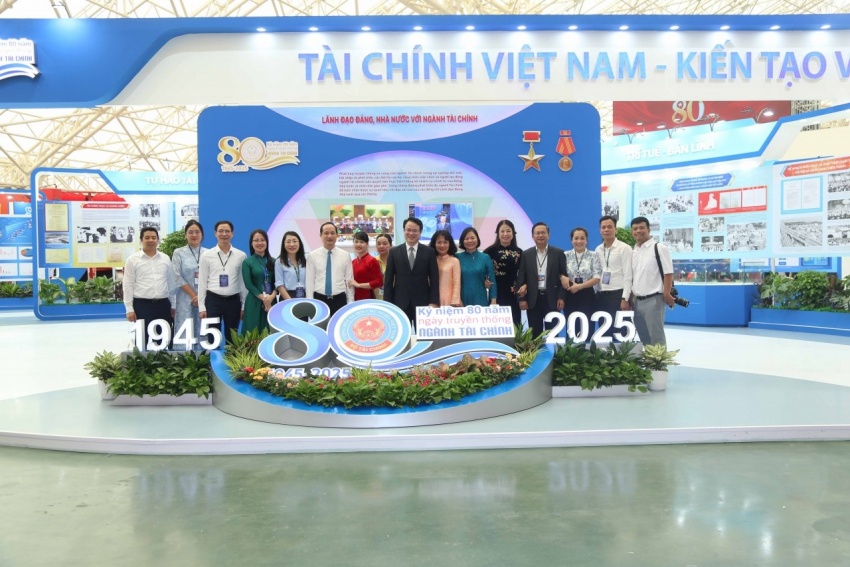
Exhibition “80 years of Vietnam's financial sector – creation and development”
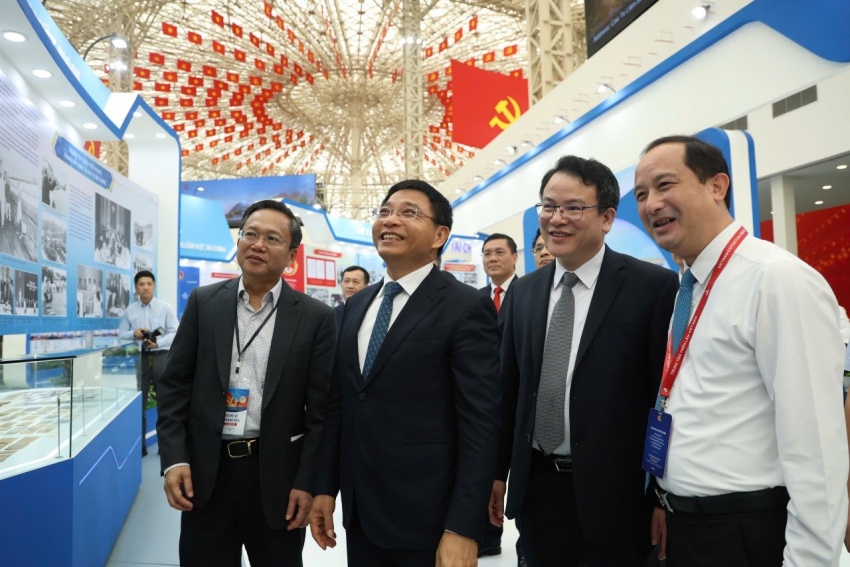
Minister of Finance Nguyen Van Thang, and Deputy Minister of Finance Tran Quoc Phuong (middle). Photo: Dung Minh

On the opening day of the exhibition, Minister of Finance Nguyen Van Thang and Deputy Minister of Finance Tran Quoc Phuong, along with leaders of the Ministry of Finance (MoF), visited the exhibition.

The MoF’s exhibition space spans 680 square metres, located in zone H8 at the National Exhibition Centre in Hanoi’s Dong Anh, summarising the formation and major achievements of the finance sector over 80 years of building and developing alongside the nation.

Exhibition “80 years of Vietnam's financial sector – creation and development”
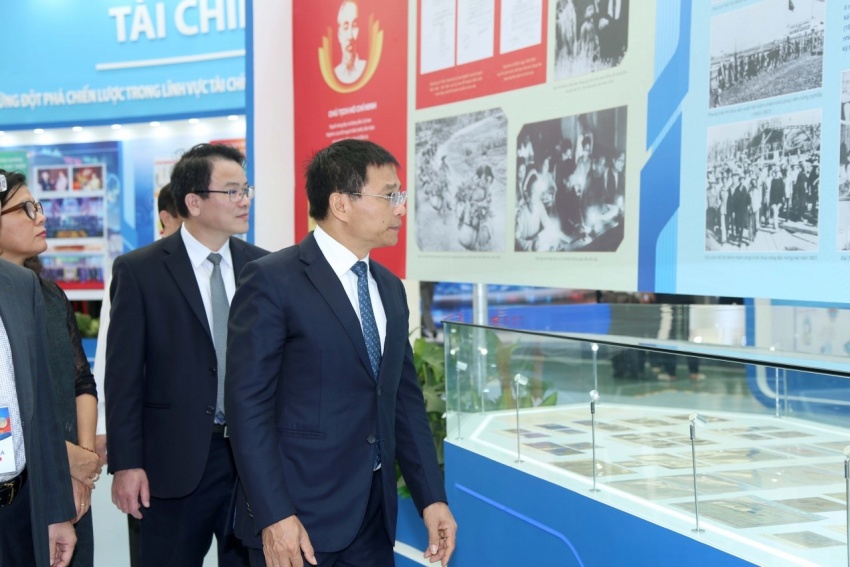
MoF leaders view the financial sector’s history. Photo: Duc Minh

Featuring thousands of documents, photographs, and valuable artifacts, the MoF’s exhibition booth introduces the images and activities of the ministry throughout different periods, using dynamic and engaging displays that creatively blend tradition and modernity. The exhibition affirms the role, growth, and significant contributions of the finance sector to the nation’s struggles for independence, reunification, renovation, and international integration.

Exhibition “80 years of Vietnam's financial sector – creation and development”
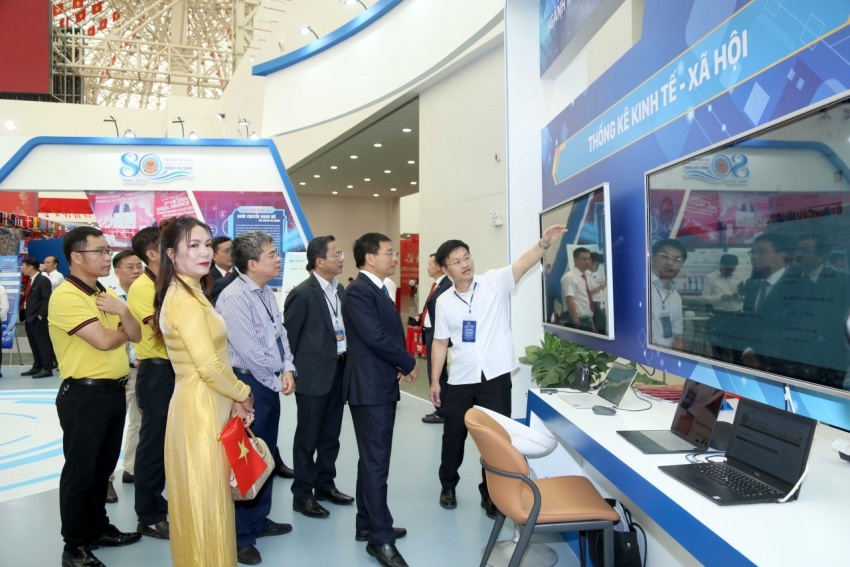
The Statistics Office booth. Photo: Duc Minh

The ministry’s exhibition space combines traditional and modern elements. A ceremonial area features the 80-year-old financial sector logo prominently displayed at the entrance, along with images of Party and state leaders with the financial sector. The exhibition focuses on creation and development, and the MoF’s booth also includes a special display area titled “The Financial Sector Steadily Entering a New Era”.

Exhibition “80 years of Vietnam's financial sector – creation and development”
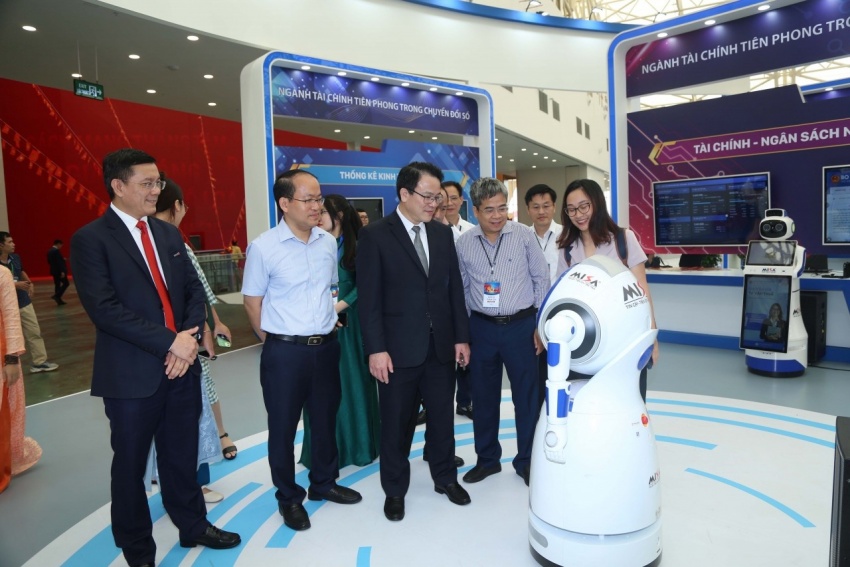
High technologies and digital transformation. Photo: Dung Minh

In addition, in zone H2, there are 16 booths representing 16 major groups and corporations under the MoF’s management, including: Vietnam National Coal and Mineral Industries Group; Vietnam Posts and Telecommunications Group; Vietnam National Industry and Energy Group; Vietnam Electricity Group; Vietnam National Chemical Group; Vietnam National Coffee Corporation; Vietnam National Shipping Lines; State Capital Investment Corporation; Northern Food Corporation; Southern Food Corporation; Vietnam National Petroleum Group; Bao Viet Holdings; Airports Corporation of Vietnam; Vietnam Railways Corporation; Vietnam Airlines; Vietnam Expressway Corporation.

Exhibition “80 years of Vietnam's financial sector – creation and development”
Deputy Minister Phuong with MoF staff. Photo: Duc Minh

With the overarching theme of “Economic Locomotives”, these booths highlight the strategic and essential roles of these groups and corporations in leading key economic sectors, ensuring macroeconomic stability, promoting sustainable growth, and contributing to national construction and defence.

Short-term traders highlight risk from securities tax change Short-term traders highlight risk from securities tax change

A proposal to introduce a 20 per cent tax rate on net profits from securities trading is drawing significant attention from the investment community.

Vietnam and South Korea strengthen exchanges on stock market supervision Vietnam and South Korea strengthen exchanges on stock market supervision

A delegation from the Ministry of Finance (MoF) led by Deputy Minister Nguyen Duc Chi had a working session with the on August 25 in Seoul.

Strategic technology networks launched Strategic technology networks launched

In a defining step towards establishing a high-tech-driven economy, Vietnam has launched three new high-level technology networks, including quantum technology, cybersecurity, and aerospace and unmanned aerial vehicles (UAVs).

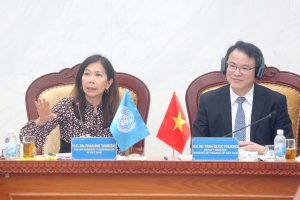
Vietnam and UN plan to enhance development cooperation Vietnam and UN plan to enhance development cooperation

Deputy Minister of Finance Tran Quoc Phuong and United Nations (UN) Resident Coordinator Pauline Tamesis co-chaired a meeting of the Joint Steering Committee (JSC) on cooperation between Vietnam and the UN on August 27.

Celebrating its 30th anniversary and Vietnam’s National Day on September 2, Suoi Tien Tourist Area will host a unique festival week packed with entertainment, cultural and artistic activities, culinary experiences, attractive promotions, and new attractions. On September 2, the park will offer up to 50 per cent off entrance tickets for the first 3,000 visitors, with prices at VND40,000 ($1.60) for children and VND80,000 ($3.20) for adults, running from 7am to 4pm.

Suoi Tien celebrates 30 years with National Day festival
Suoi Tien Theme Park offers nighttime entertainment for visitors from August 29 to September 2

The highlight is a live art performance on the water stage, from August 29 to September 2, featuring numerous renowned artists and nearly 100 professional actors. The show traces Suoi Tien’s evolution from wild terrain to a celebrated tourist destination, vividly celebrating southern culture through spectacular performances that blend contemporary music with advanced lighting effects.

Each performance immerses the audience in a glittering atmosphere where legacy and modernity collide, creating an indelible impression.

Suoi Tien celebrates 30 years with National Day festival
The performance begins at 6 pm from August 29, with special performances on the nights of September 1 and 2

This is more than just a visual feast; it is also a heartfelt thanks to the millions of visitors who have followed Suoi Tien over the last 30 years. Along the main path, guests will be entertained by spectacular fire dancers, DJs, and LED dance performances, creating a festive atmosphere filled with shimmering lights.

Furthermore, unique experiences such as exploring Unicorn Palace’s 18 levels of hell, fishing for crocodiles at night, an appealing children’s play area, and a food street with various delicacies promise to provide moments of pleasure and total relaxation for all members of the family.

The exhibition space ‘Suoi Tien 30 years – Land of Living Legends’ is designed as an emotional journey, evoking Vietnamese values, lighting up memories and continuing to write a new epic chapter for the future.

Here, visitors will experience role-playing and checking in with legendary characters through modern technology, as if lost in a real-life fairy tale world, where the past and present blend, so that each person can transform into a living part of the 30-year Suoi Tien story.

Suoi Tien celebrates 30 years with National Day festival
‘30 Years of Magic – Suoi Tien Fairy Tale’ parade

At the ‘Time Travel to the Past’ mini-exhibition, visitors can revisit cherished memories with photographs of themselves and their families at Suoi Tien during the 1990s and 2000s,

The parade performance ‘30 Years of Journey – Suoi Tien Fairy Tales’ brings beloved characters to life through vibrant colours, music, and dazzling lights. Spectacular acts such as Son Tinh – Thuy Tinh, fire dancer, and clown magic tricks promise to leave lasting impressions on audiences.

Suoi Tien invites families and friends to enjoy its 30th-anniversary festival, explore the vibrant attractions, and create lasting memories in a lively, festive atmosphere.

Suoi Tien Theme Park – Address: 120 Hanoi Highway, Tang Nhon Phu ward, Ho Chi Minh City

Hotline: 1900636787

Facebook: https://www.facebook.com/SuoiTienThemePark/

Website: https://suoitien.com/

HCM City metro ready next year HCM City metro ready next year

Construction of HCM City’s first metro line from Ben Thanh market in District 1 to Suoi Tien Tourist Park in district 9 is expected to be completed by the end of 2020, leaders of the city People’s Committee said after visiting the construction site on Thursday.

Ben Thanh underground trade center to be built in Ho Chi Minh City Ben Thanh underground trade center to be built in Ho Chi Minh City

The joint venture of Toshin Development Co., Ltd., JOIN, Nikken Sekkei, and Osaka Chikagai was put forward by Ho Chi Minh City People’s Committee to become the developer of Ben Thanh underground trade centre.

Suoi Tien Farm: the heart of green tourism for Lunar New Year Suoi Tien Farm: the heart of green tourism for Lunar New Year

Immerse yourself in nature, explore the farm, and take part in environmental protection activities – a Lunar New Year (Tet) holiday at Suoi Tien Farm promises not only excitement but also the opportunity to spread the message of sustainable living. Welcome the new year in your own unique way, filled with joy and meaning.

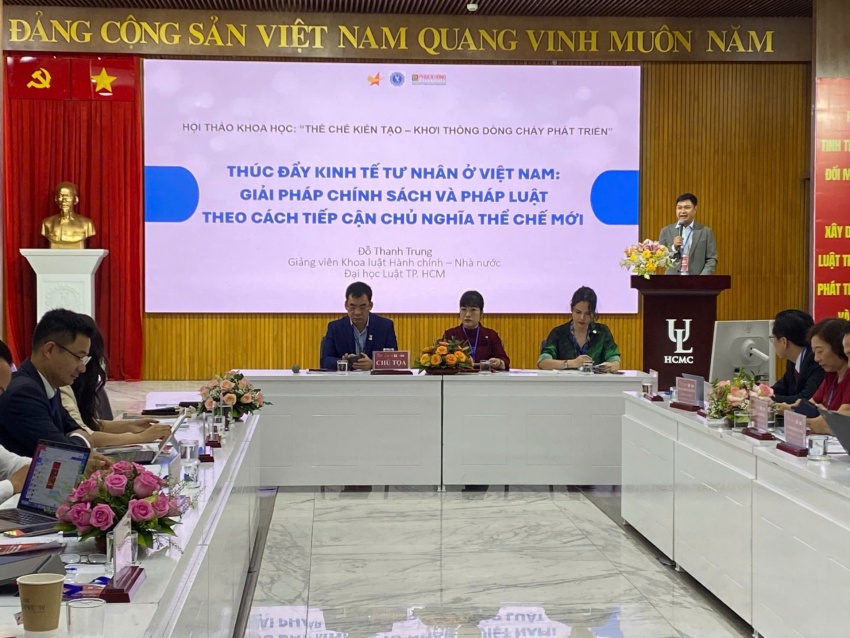
The seminar in Ho Chi Minh City on August 25 explored how strong institutions and a fair legal framework can unlock private-sector growth and support Vietnam’s broader economic development. The session formed part of the legal-themed discussions in the Local Dialogues of this year’s Vietnam Private Sector Forum (VPSF), running from July until September.

Experts highlight legal reforms as key to private-sector growth
The seminar, titled ‘Enabling Institutions – Unleashing the Flow of Development’ was held on August 25

In her opening remarks, Pham Thi Bich Hue, vice president of the Vietnam Young Entrepreneurs Association and head of the VPSF Organising Committee, highlighted the “quartet of pillar resolutions” – 66-NQ/TW, 68-NQ/TW, 57-NQ/TW, and 59-NQ/TW – noting that they have helped shape the nation’s ambitious development goals.

“To turn our development goal aspirations into reality, we first need an institutional system that is transparent, fair, and predictable,” Hue said. “That’s why today’s thematic session is such an important part of the VPSF journey.”

According to Hue, nine local dialogues and a startup-focused session have already taken place, and today’s second thematic session is helping lay the groundwork for the ministerial-level discussions and the high-level plenary set for September 15–16.

“I am confident that every voice in this room will contribute to strong, evidence-based, and practical policy recommendations–ones that can remove obstacles and chart a sustainable path for private-sector growth,” said Hue.

Tran Dinh Chien from AVB Lawyers and a member of the Vietnam Young Entrepreneurs Association, observed that in the current economic context, Vietnamese businesses and entrepreneurs are facing many challenges.

“Among the biggest bottlenecks are overlapping legal frameworks, lengthy litigation processes averaging 400 days, and dispute resolution costs that can consume nearly 30 per cent of the claim’s value,” Chien said.

Additionally, Chien added that the criminalisation of certain economic relations under Article 175 of the Penal Code has left many firms vulnerable and hesitant to pursue innovation.

To address these issues, Chien recommended that the government expand the use of simplified legal procedures, pilot the ‘loser pays’ principle (where the losing party bears litigation costs), and limit the criminalisation of economic relations to protect enterprises from unnecessary risks.

For business associations, he suggested establishing specialised legal committees, implementing regular legal training, building legal databases, and developing internal arbitration and mediation mechanisms to help businesses resolve disputes quickly and effectively.

Sharing the same perspective, Dr. Nguyen Thi Anh Hong, lecturer at the Faculty of Criminal Law, Ho Chi Minh City University of Law, emphasised that criminal law is not just a tool to combat crime, it is also a vital component in establishing legal order.

“Its purpose is to ensure safety for business activities and protect the legitimate rights and interests of enterprises,” said Hong. “A transparent and fair legal system will serve as a springboard for sustainable private-sector development. However, the ongoing criminalisation of civil and economic violations has created a climate of apprehension among businesses.”

“Many economic disputes that could have been resolved through civil measures or arbitration have been escalated into criminal cases, paralysing business operations,” Dr. Hong said.

“This not only results in significant losses for businesses, but also erodes confidence in the investment environment,” she added.

To address these challenges, Dr. Hong suggested shifting criminal policy towards reducing the criminalisation of economic matters and clearly distinguishing civil, administrative, and criminal responsibilities.

“Violations that can be resolved through civil or economic measures should not be subject to criminal proceedings. At the same time, genuinely harmful acts such as fraud, money laundering, or environmental destruction must be strictly prosecuted to protect fairness and maintain trust for legitimate businesses,” she explained.

From her perspective as vice president of the Vietnam Young Entrepreneurs Association, Luu Thi Thanh Mau, CEO of Phuc Khang Corporation, asserted that the role of the private sector has been clearly demonstrated, contributing up to 40 per cent of national GDP and driving both broad-based and in-depth economic growth.

Therefore, the introduction of new policies should redefine the perception of the private sector’s role while also recognising private enterprises not merely as entities to be managed, but as essential partners in building a modern, transparent, and effective economic institution.

According to Mau, private businesses are directly exposed to market dynamics, meaning every policy or legal change has immediate effects.

“Feedback, whether positive or negative, serves as a vital basis for legislators and regulators to make timely, flexible, and context-appropriate adjustments. In particular, the community of small and medium-sized enterprises, which accounts for the majority of the economy, bears the brunt of these impacts and requires greater support,” Mau said.

“I believe that with the government’s companionship and the business community’s determination for renewal, we can certainly build a transparent, fair, and highly competitive economy that contributes positively to Vietnam’s international integration,” Mau added.

PM outlines 15 groups of tasks, solutions to boost private economic sector PM outlines 15 groups of tasks, solutions to boost private economic sector

After three months of implementing Resolution 68, Vietnam’s private economic sector has seen many positive changes, with the establishment of over 24,000 new businesses in June and more than 16,000 in July. This brought the total number of newly established enterprises in the first seven months of 2025 to nearly 108,000.

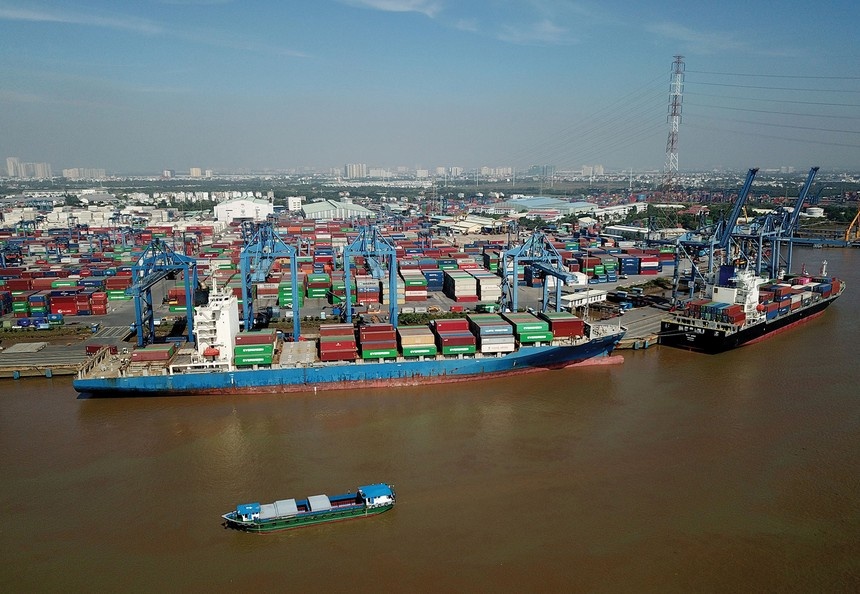
Vietnam’s outlook for imports, exports, and cargo throughput via seaports is considered favourable in the forthcoming months, as the country faces a 20 per cent reciprocal tariff rate from the United States, significantly lower than China’s 55 per cent and India’s 25 per cent, and on par with Bangladesh.

Maritime logistics firms thrive on global trade dynamics

At the same time, Vietnamese exporters are effectively leveraging preferential tariffs through the country’s extensive network of free trade agreements, allowing for more flexible and efficient operations.

As the global economy improves, trade demand is expected to rise sharply, thereby stimulating import-export activities and the entire logistics supply chain.

In the long term, Shinhan Securities predicts that high US tariffs on imports, especially from China, will shift trade flows, making intra-Asia and Asia-Europe routes more active, as Vietnamese firms diversify their export markets to reduce dependence on the US.

Hanoi-based Hai Minh JSC has established new agency offices in Hong Kong and India, and plans to launch new services on the Ho Chi Minh City – Shanghai – Port Klang route. It also intends to set up an agency for an Asian shipping line in Haiphong.

Meanwhile, Hai An Transport and Stevedoring JSC is planning to further expand its fleet over the next five years, aiming for longer routes such as the Mediterranean, Europe, and the US West Coast.

The development of larger-sized vessels is in line with Hai An’s long-term strategy to enter trade lanes that account for nearly 40 per cent of global container traffic.

Hai An currently operates 17 container vessels with a total capacity of 28,200 TEUs, primarily serving domestic and intra-Asia routes.

The company’s board of directors recently approved a plan to build two new container vessels in China, each with a capacity of 2,300 TEUs, with a total investment of up to $92 million.

According to Hai An’s leadership, over the past five years since the company began leasing out vessels, this business segment has become increasingly significant, currently contributing about 60 per cent of total revenue, while self-operated services account for the remaining 40 per cent.

Shinhan Securities expects Hai An’s business performance in the second half of the year to remain favourable, driven by strong freight rates for new vessels and the launch of additional intra-Asia routes amid rising global trade demand.

For Gemadept Corporation (GMD), MB Securities forecasts that the company will increase its cargo volume on intra-Asia routes and expand into new markets to offset the decline in US-bound shipments.

In addition, higher service fees are expected to contribute positively to Gemadept’s second-half business results. MB Securities’ forecasts suggest Gemadept’s net profit will grow by 16.5 per cent in 2025 and 14.4 per cent in 2026.

Vietnam Container Shipping JSC (Vinconship: ticker VSC) stated that it is not heavily reliant on the US market, as it focuses on domestic and intra-Asia routes.

Goods exported to the US only account for about 3.9 per cent of the company’s total handling volume. Furthermore, the company has prepared contingency plans to mitigate any potential tariff impacts.

Becoming a major shareholder in both Vinaship JSC and Hai An has helped Viconship improve profitability through indirect revenue streams from the two firms.

Both Vinaship and Hai An are expected to witness profit growth in 2025, benefiting from the trend of front-loading shipments, early orders placed ahead of potential tariff changes, thereby boosting Viconship’s financial results.

In mid-August, Viconship and Hai An announced they will establish Hai An Green Shipping Lines Co., Ltd., with an expected investment of around $180 million to build a pair of 7,000 TEU container vessels.

Overall, logistics enterprises remain among the sectors with strong long-term prospects. Vu Thanh Hai, chairman of Hai An JSC, noted that Vietnam is targeting at least 8 per cent economic growth this year and double-digit growth between 2026 and 2030.

“As the economy improves, trade demand will rise significantly, further stimulating import-export activities and the entire logistics supply chain,” he said.

On the stock market, VSC shares recorded five consecutive ceiling gains from August 12 to 18. Other maritime transport stocks also saw positive momentum, such VSC rising more than 26 per cent in value, and GMD increasing by 3.6 per cent.

In the first seven months of 2025, Vietnam’s total import-export value reached $514.7 billion, up 16.3 per cent on-year. Imports totalled $252.26 billion, up 17.9 per cent; while exports reached $262.4 billion, up 14.8 per cent compared to the same period last year.

Alongside export growth, seaport operations have remained vibrant.

According to the Haiphong Maritime Administration, as of the end of July, total cargo throughput via Haiphong’s ports had reached 65.5 million tonnes, showing a 7 per cent jump on-year.

According to the Ho Chi Minh City Maritime Administration, in the first half of 2025, container throughput at Cai Mep – Thi Vai (including domestic cargo) reached 5.96 million TEUs, up 17 per cent compared to the same period last year.

The fourth quarter, the peak season for retail and import-export activities, is expected to maintain the bustling pace at seaports, providing a boost to maritime transport and logistics companies.

Logistics groups vow to partner up locally Logistics groups vow to partner up locally

The growth of exports to important overseas markets is sustaining the growth momentum of Vietnam’s logistics sector.

Green is new buzzword for logistics arena Green is new buzzword for logistics arena

As sustainable development becomes a mandate to operate in the logistics industry, companies are stepping up their efforts to green their operations.

Pros and cons must be tackled in logistics industry Pros and cons must be tackled in logistics industry

More tariff barriers around the globe are expected to affect the logistics industry in some shape or form. Dao Trong Khoa, president of the Vietnam Logistics Business Association, spoke to VIR’s Thuy Nguyen about what may lie ahead.

5G to drive next growth phase in Vietnam
Rita Mokbel, president at Ericsson Vietnam

How has 5G commercialisation been performing in Vietnam since its rollout last year, and what new 5G use cases has Ericsson brought forward?

5G has been commercialised since October 2024, with all our customers, Viettel, VNPT and MobiFone launching their 5G services in Vietnam. In major cities, we already have strong 5G coverage that will continue to grow.

Vietnam did very well in terms of deploying 5G in a short timeframe; what usually takes years in other countries. In Vietnam, 5G was licensed in March and went live in October. In less than 12 months, the government licensed operators, and together we deployed 5G. This was very impressive and very smart.

Now, together with our customers, we are exploring use cases. For example, we have started trialling fixed wireless access with some of them. With the investment in 5G, it’s possible to leverage this network to provide fixed wireless access to other areas.

In addition, we are also testing 5G functionalities with our customers such as network slicing, network exposure and UE routed selection policy. These features provide the 5G network with clear distinction over 4G, to expose and use various network characteristics to address new enterprise and retail use cases.

We are now working to establish vertical ecosystems in Vietnam by connecting solution providers of AI camera, autonomous cars, drones, and robots; end-users such as manufacturing and ports; and operators to boost the utilisation of 5G technology to drive digitalisation in Vietnam.

There are many other use cases. Together with our customers, we are working to bring this 5G technology closer to enterprises and consumers faster.

What challenges face the local market in its path of anticipating the next growth phase?

While our customers are deploying 5G in major cities, there’s still a lot to be done to expand coverage to at least 90 per cent of the nation. This requires significant effort and resources from both the government and our customers. But I believe we are getting closer.

For example, the Ministry of Science and Technology’s (MoST) initiative to sponsor 15 per cent of the investment for any operator deploying 20,000 sites is already a great step forward. Not all operators will reach 20,000 sites this year, but we have great progress cross the board.

The other challenge, which is also an opportunity, is market readiness. When we showcase global references, they often asked for examples from Vietnam. This is because building local competence is essential. That’s why, as we work across different industries, it’s important to demonstrate capabilities locally to gain momentum and attract interest.

Traditionally, our customers have focused on providing the best network performance and delivering strong consumer use cases and customer experiences.

But now, they need to extend this to enterprises as well. We see 5G as critical for mission-critical applications today, those involving public safety, security, and defence. And all of this requires expertise and competence from both our customers and ourselves.

Vietnam has issued strategic resolutions to accelerate innovation and digital transformation. How is their importance to the business community, and Ericsson as well?

Vietnam has set a very ambitious goal to become a high-income country by 2045, and to make the digital economy even stronger, contributing up to 30 per cent of total GDP by 2030.

We commend the government’s leadership in trying to achieve this ambition. It has issued several resolutions and are driving digital transformation across different enterprises, considering 5G as critical national infrastructure.

The 700 MHz auction is in progress and will ensure good 5G coverage for standalone networks in Vietnam.

All these initiatives align with the government’s ambition and support its vision and goals. The government is eager to introduce more research and development (R&D) investments, focusing on scaling and strengthening talent in Vietnam. We believe we can contribute to this initiative by supporting more R&D investments and enhancing talent competence in Vietnam.

We are working with different universities on how to upskill talent in Vietnam, not only in 5G technology but also in emerging technologies like AI, the cloud, digital twins, and others. Ericsson wants to continue being a trusted partner in Vietnam’s journey towards becoming a leading digital economy in Asia.

What new prospects for enterprises and industries do you foresee?

We believe that 5G is a game changer, not only for consumers, but also for enterprises. We have a 5G business study showing that 5G will create new revenue for our customers in Vietnam, estimated at $1.5 billion by 2030. This is huge. For cloud and AI to scale, you need strong connectivity. Now, when we see a lot of new applications, whether in AI or new cloud requirements, none of these can happen without 5G. The government also believes that 5G is critical national infrastructure because it’s the foundation on which the economy can be built.

Obviously, some industries will benefit the most. One of the industries is manufacturing, which is undergoing a huge transformation thanks to 5G and advanced connectivity. We have seen these benefits ourselves in our US 5G smart factory, where engagement and productivity doubled, waste management was reduced by 32 per cent, and even product quality improved.

Another sector that will benefit from 5G is healthcare. With 5G, healthcare will shift from offline to more online, remote care. In Vietnam, and globally, while healthcare is a huge industry, it is still very difficult in rural areas to access highly competent and skilled doctors. With digital healthcare, it’s possible to reach any doctor or hospital remotely.

In order to capture that growth and those opportunities, one way is to join forces with operators engaging enterprises in manufacturing, healthcare, and areas like airports or seaports, and see how we can leverage 5G to bring automation.

Another way is to work with academia to train students, build national competence, and create an ecosystem where the government, academia, and both public and private sectors work together to drive stronger transformation.

5G subscriptions expected to hit 2.9 billion globally 5G subscriptions expected to hit 2.9 billion globally

The telecom industry is entering an exciting new chapter with strong 5G adoption and a growing ecosystem that will drive innovation and reshape the way people live, work, and connect.

Vietnam’s adoption of 5G networks driving innovation Vietnam’s adoption of 5G networks driving innovation

The telecom industry is entering an exciting new chapter with strong 5G adoption and a growing ecosystem that will drive innovation and reshape the way people live, work and connect.

South Korea’s SK Leaveo, the biodegradable materials investment arm of SKC, earlier in August secured strategic funding of $40 million from the International Finance Corporation to finance construction of its biodegradable plastics plant in northern Haiphong.

The facility is part of SK Leaveo’s strategy to capture the growing demand for environmentally friendly packaging. The project will increase value addition and manufacturing complexity in the plastic packaging industry.

The funds will be used to complete and operate the Vietnam production facility, which is scheduled for completion in this quarter. SK Leaveo plans to reach an annual output of 70,000 tonnes of reinforced PBAT, aiming for commercialisation in the first half of 2026.

The previous month, Swedish packaging and processing giant Tetra Pak began to implement an additional aseptic production line, worth around $113 million at its Binh Duong facility.

Nguyen Thanh Giang, managing director of Tetra Pak Vietnam, said, “Vietnam’s packaging industry is at a pivotal moment. With rising consumer demand for sustainable and innovative solutions, the need for safe, lower climate-impact, and future-ready packaging is more critical than ever. Paper-based packaging, especially in the ready-to-drink segment, is leading this transformation.”

Tetra Pak’s expansion of the Binh Duong factory doubles its capacity to over 30 billion packs annually and adds 15 additional innovative and sustainable packaging formats. This enables faster delivery of just 7-10 days, giving Vietnamese manufacturers greater agility to meet trends like ready-to-drink and plant-based nutrition.

“With 99 per cent of domestic volume sourced for our local customers and cutting-edge Swedish technology, we’re building a resilient supply chain while ensuring food safety and quality,” Giang added. “The new capacity will contribute 55 per cent for Vietnam, 29 per cent to Malaysia, Singapore, Philippines, and Indonesia, and 12 per cent to Thailand, as well as to other countries including Australia and New Zealand.”

Elsewhere, Thailand’s SCG Packaging (SCGP) in June strengthened its consumer packaging business through an investment in Duy Tan Plastics Manufacturing Corporation.

The company has purchased an additional 30 per cent stake in Duy Tan. The investment, totalling approximately $109 million, raises SCGP’s total shareholding to 100 per cent. The funding is intended to broaden its range of solutions, diversify its product offerings, and deliver integrated services in response to the growing demand for packaging solutions. The move follows SCGP’s acquisition of 70 per cent of Duy Tan in 2021.

According to research by Dezan Shira & Associates, Vietnam’s packaging industry presents compelling growth fundamentals that foreign investors may not be able to ignore. Both paper and plastic packaging are growing at an annual rate of 8-10 per cent, with paper packaging expected to reach $4.54 billion by 2030, up from $2.85 billion in 2025. Vietnam’s packaging exports already exceed $2 billion annually.

Driving investment now is a policy shift, including Vietnam’s net-zero commitments and a long-term e-commerce plan regarding recyclable packaging that creates immediate demand for advanced, sustainable technologies.

Than Quoc Khanh, international business advisor at Dezan Shira & Associates in Hanoi, said, “The packaging industry is undergoing fundamental restructuring. Foreign companies are buying established players outright – the SCG acquisition of Duy Tan being a prime example – which creates a two-tier system of well-capitalised, advanced operations versus smaller local manufacturers finding their niche.”

Khanh further noted Tetra Pak’s aseptic packaging expansion showcases the stark technology gap that local competitors cannot match. This pressure, however, drives specialisation. Vietnamese companies like Ngoc Nghia, Bao Van, and Nhua Tan Tien have secured strong positions in eco-friendly PET bottles by leveraging relationships and agility. Meanwhile, high-tech segments like dairy packaging remain foreign-dominated due to technical complexity.

“Sustainability requirements are reshaping competitive dynamics entirely. When companies like SK Leaveo bring biodegradable materials to the market, they’re not just offering alternatives – they’re setting new standards,” Khanh said. “Local companies face a choice: adapt quickly or risk relegation to low-value segments. The winners will be those combining local market understanding with advanced capabilities, whether through partnerships or organic development.”