SINGAPORE – Media OutReach Newswire – 15 August 2025 – SafetySam, Singapore’s provider of safety solutions and workwear, is proud to announce a new product launch—the WORKSafe Greta Safety Boot.
Born from Craftsmanship, Built for the Field
Known as “Generally Resistant Enough To Anything”, the Greta boot is a rugged innovation designed for industrial professionals who rely on their footwear every day. The new product launch demonstrates the blend of traditional leather craftsmanship with cutting-edge safety performance.
After the success of its sneaker-style WORKSafe Starfire, SafetySam sought to create something more timeless. Inspired by classic leather boots and the designer’s own appreciation for Goodyear-welted construction, Greta was developed to meet a clear gap in the Singapore market: a durable, stylish, and functional safety boot that doesn’t compromise in wet or high-intensity work environments.
“Cemented and injection-moulded soles just don’t cut it in our humid climate,” said Jeffrey Seah, General Manager at PDS International. “We needed a boot that wouldn’t split, would age well, and still meet the demands of modern workers.”
What Sets Greta Apart
Greta is certified to EN ISO 20345:2022+A1:2024 and SS513:2005. It has been field-tested and endorsed by workers across construction, oil and gas, manufacturing, and logistics sectors. The new product launch introduces a range of features to deliver protection, performance, and durability.

  • Goodyear-Welted Construction for water resistance and long-lasting durability (WR).
  • Natural Latex Outsole with superior grip and hot contact resistance (HRO).
  • Free Lacing System for quick on-and-off without sacrificing style.
  • Metatarsal Impact Gel Guard (M) to shield the top of the foot.
  • Penetration-Resistant Sole (PS) that’s non-metallic yet highly protective.
  • Antistatic Protection (A) to guard against electrostatic discharge.
  • Energy Absorption Heel (E) and PU/PE insole for fatigue-free comfort over long shifts.
  • HBR lining is a waterproof, breathable membrane that contributes to the overall shoe achieving S7S compliance.

Who Is Greta For?
The new product launch targets the following groups:

  • Construction and Civil Engineering – where falling objects and heavy impacts are daily risks.
  • Oil and Gas / Marine – where exposure to fluids, heat, and slippery surfaces is constant.
  • Heavy Manufacturing – where hot metals, debris, and rough terrain challenge every step.
  • Logistics and Warehousing – where long hours on concrete demand both comfort and support.

The Story Behind the Boot: Greta and the Wild West
As with all great WORKSafe products, Greta is brought to life through SafetySam’s original comic series. This time, Sam is thrust into a Wild West multiverse—a tribute to the rugged origins of leather boots. There, he combines old-world techniques with modern safety innovations, mirroring the real-world development process behind Greta.
“The Wild West aesthetic captures the spirit of Greta—gritty, independent, and ready for anything,” as revealed by Crystal Heng, Marketing Manager at PDS International. “It’s a fun, narrative-driven way to express the soul of the product.”
The comic not only reflects the journey of a boot but also conveys a belief: workwear can be both legendary and practical.
Authentic Launch, Real Connections
The product launch is in line with SafetySam’s long-standing community—those who’ve supported the brand’s evolution from the ground up. The campaign now expands across digital platforms, social media, and storytelling content designed to resonate with both seasoned tradespeople and a new generation of users.
Notably, SafetySam is actively exploring partnerships. It is seeking content creators, industrial influencers, and distributors who share the same appreciation for quality craftsmanship and purpose-driven gear.

The issuer is solely responsible for the content of this announcement.

HONG KONG SAR – Media OutReach Newswire – 13 August 2025 – On August 11, 2025, Lens Technology, a leading provider of one-stop precision manufacturing solutions for the entire intelligent terminal industry chain, hosted a survey at its Shenzhen office, welcoming 12 institutional investors, including Bosera Asset Management, China Southern Fund and Essence Fund. The session, led by Vice President and Board Secretary Jiang Nan, addressed critical investor concerns, shedding light on the company’s robust strategies in supply chain stability, technological innovation, and diversified business expansion. Below is an in-depth analysis of the survey’s key highlights, illustrating how Lens Technology is navigating industry shifts to strengthen its competitive edge.
Impacts of major North American clients’ investments in cover glass production
Recent reports of major North American clients and related companies increasing investments in U.S.-based cover glass production sparked market interest in their potential impact on Lens Technology. The company clarified that Lens Technology, a global leader in brittle material processing, specializes in enhancing the value of raw glass through advanced processing techniques, rather than producing glass substrates. The company collaborates with strategic partners who supply raw glass via a Hong Kong distribution center and a Hunan bonded warehouse, ensuring seamless and efficient delivery. Lens Technology is actively working with these partners to develop next-generation cover glass, incorporating innovative formulations to elevate product performance and user experience, thereby strengthening its competitive position in the global market.
Foldable Screen Trends: Innovative Strategies and Market Leadership
As a leading global supplier of ultra-thin flexible glass (UTG), Lens Technology capitalizes on its deep expertise, extensive patent portfolio, and advanced production capabilities to pioneer a multilayer foldable screen design. This innovative approach eliminates creases, enhances screen flatness, and sets a new standard for next-generation foldable displays. With a dominant market position, Lens Technology is advancing smoothly in new product development and validation, while actively preparing for large-scale production to meet growing demand.
New 3D Glass: Expanding Market Potential and Value Growth
The market potential and value of the newly designed 3D glass back cover were a focal point for investors. Lens Technology’s innovative 3D glass back cover, featuring flat edges and a convex camera module, optimizes internal device layouts and enhances imaging performance, establishing it as a preferred solution for premium flagship devices. The complex processing of this design drives surging demand, significantly increasing per-unit value and fostering a market trend of rising volume and pricing. Lens Technology anticipates sustained benefits from this technological advancement in the years ahead.
Automotive Business: Technological Edge and Growth Prospects
With decades of expertise in electronic glass processing, Lens Technology leads in the production of lightweight, chemically strengthened, and high-precision automotive glass. Its ultra-thin laminated glass, featuring advanced capabilities such as soundproofing, heat insulation, UV protection, and HUD projection, has been integrated into new models by leading new energy vehicle manufacturers, with mass production commencing in late 2025. Accelerated partnerships with global automotive brands are driving significant growth, positioning Lens Technology as a key player in the evolving automotive industry.

The issuer is solely responsible for the content of this announcement.
Lam Dinh Thang, director of Ho Chi Minh City Department of Science and Technology, said the city has entered a new development phase driven by high labour productivity and advanced technology, with the digital economy seen as an inevitable growth engine.

“Ho Chi Minh City has made the digital economy one of its key development pillars, setting targets 5–10 per cent above the national average. It aims for the sector to account for 25 per cent of regional GDP this year and 40 per cent by 2030,” Thang said at an August 12 seminar on the digital economy as a growth driver for the southern metropolis, co-organised by Ho Chi Minh City Department of Science and Technology and the University of Economics Ho Chi Minh City (UEH).

“Our goal is for the city’s digital economy to truly and effectively contribute to a double-digit economic growth rate starting from 2026,” Thanh added.

Ho Chi Minh City taps digital economy to power post-merger growth
Photo: Le Toan.

Meanwhile, according to Nguyen Huu Yen, deputy director of Ho Chi Minh City Department of Science and Technology, to develop a strategic roadmap for the coming period, the city needs to rely on five pillars: improving the institutional framework, developing digital infrastructure, enhancing human resource quality, building an innovation ecosystem, and strengthening cooperation and linkages.

“In particular, Ho Chi Minh City will leverage the central urban area’s advantages in services and innovation, Binh Duong’s industrial strengths, and Ba Ria-Vung Tau’s seaport and tourism potential, to form a comprehensive digital economy value chain,” said Yen.

Assoc. Prof. Dr. Tran Minh Tuan, director of the Department of Digital Economy and Digital Society under the Ministry of Science and Technology (MoST), shared the formula for success in the digital economy.

First, according to Tuan, the digital economy must be measured by online results. “The MoST has deployed an intelligent survey tool on smartphones, allowing citizens to evaluate action programmes. Based on these evaluations, we can directly measure the impact of initiatives in numerical terms, and from there adjust relevant policies.”

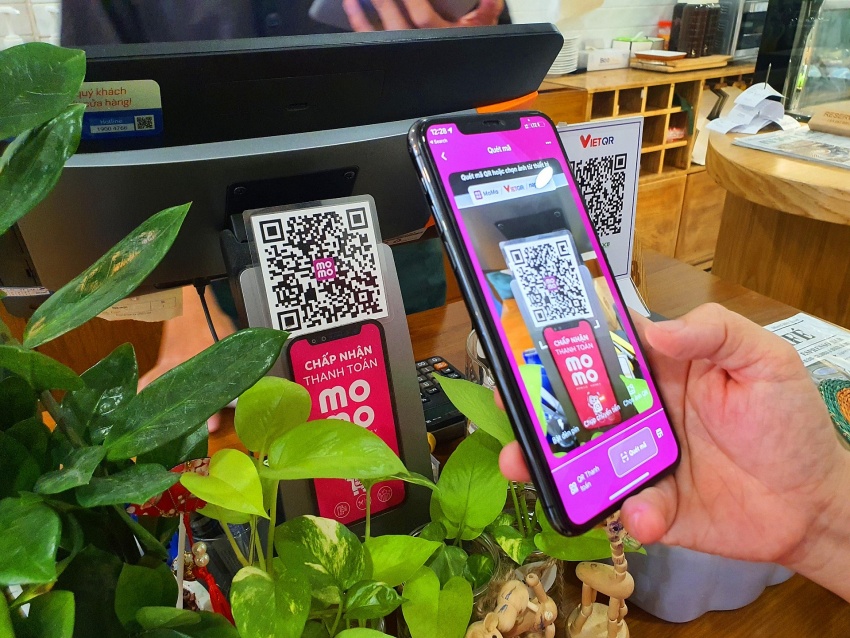
Second, the wholesale and retail support ecosystem should include e-commerce platforms (such as Shopee, Lazada), customer relationship management systems (salesforce), warehouse management systems, online payment platforms (such as Momo, ZaloPay), and data analytics tools to optimise business operations.

Third, is a demand-supply connection model that coordinates between central and local levels, a structured collaboration aimed at addressing imbalances in resources, products, and services between central and local governments through mechanisms such as information exchange, shared responsibility, resource allocation, and unified policies to achieve socioeconomic efficiency.

In addition, the MoST is implementing plans to enhance the role of small- and medium-sized enterprises (SMEs) in digital transformation. SMEs currently account for 97 per cent of all enterprises and contribute 60 per cent of GDP, but their labour productivity is three to four times lower than the regional average.

“The ministry has developed a set of digital transformation assessment indicators for SMEs, and proposed solutions such as digital signatures, e-invoices, e-commerce, and AI platforms tailored to each sector,” Tuan said, adding that SMEs are the focus due to their simple business models and the potential to boost productivity by 15–20 per cent if digital transformation is successfully implemented.

Meanwhile, Assoc. Prof. Dr. Pham Khanh Nam, rector of the School of Economics, Law, and State Management (under UEH), said Ho Chi Minh City should prioritise the development of a shared data repository, encourage digitalisation, and connect data from multiple sources, while ensuring privacy protection and cybersecurity.

At the same time, the city needs to invest heavily in developing technology platforms and high-quality workers, forming an innovation community, and supporting Vietnamese-made technology products.

Despite its many advantages, Ho Chi Minh City also faces significant challenges. One major challenge is the disparity in the level of digitalisation between regions, particularly between Ho Chi Minh City, Binh Duong, and Ba Ria-Vung Tau.

In addition, cybersecurity is emerging as a major issue as the city becomes a mega-urban area, increasing the risk of cyberattacks. Moreover, changing the digital mindset and culture of citizens and businesses, especially SMEs, remains a long journey that will require greater guidance and support from the city government.

Ho Chi Minh City aims for a smarter and greener future Ho Chi Minh City aims for a smarter and greener future

Ho Chi Minh City’s development vision to 2050 is a strategic integration effort. VIR’s Quynh Chau spoke with Doan Manh Thang, director of Water Technology and Resilience at Royal HaskoningDHV Vietnam, which led a consortium of 10 consultants to set up the city’s master plan.

Ho Chi Minh City and Danang gear up for financial hub projects Ho Chi Minh City and Danang gear up for financial hub projects

Ho Chi Minh City and Danang are advancing plans to establish international fnancial centres as part of Vietnam’s long-term growth strategy.

Ho Chi Minh City - Hyogo Economic Forum promotes green and digital cooperation Ho Chi Minh City – Hyogo Economic Forum promotes green and digital cooperation

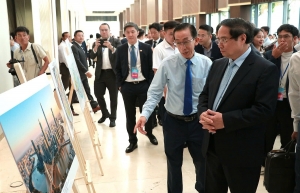
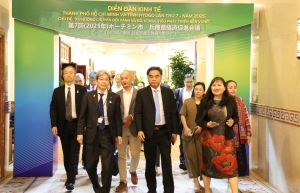
Green and digital transformation for sustainable development was the central theme of the 7th Ho Chi Minh City – Hyogo Economic Forum, held in Ho Chi Minh City on August 5.

HONG KONG SAR – Media OutReach Newswire – 8 August 2025 – Bora Pharmaceuticals (TWSE: 6472) today announced its financial results and operational highlights for second quarter of 2025.

Quarterly Business and Financial Highlights

· Company reported quarterly basic EPS of NT$5.95, with NT$1.81 from discontinued operations. OPEX was ~15% below guidance, aided by a ~4% FX gain. Gross margin was impacted by ~4% due to lower CDMO utilization.
· FX loss totaled at ~NT$252 million in 2Q25, or NT$2.4 per share; Excluding FX impact from operational to non-OP, core EPS would have reached approximately NT$8.08, second highest on record after 1Q23, excluding all M&A related non-operating gains.
· Fueled by expanded capacity and new dosage forms, Bora’s CDMO business in 1H25, including internal orders, grew 69.5% compared to same period last year, reaching more than NT$5.01 billion, and yet posted a 26.6% sequential decline during the quarter due to slower momentum navigating through transitional integration phase mainly at sterile injectable site in Maryland and Zhunan facility with no impact on long-term fundamentals.
· Pharma Sales revenues in 1H25 rose 23.0% YoY based on reported unaudited monthly sales, driven by market share expansion of the vigabatrin franchise across three dosage forms. VIGAFYDE uptake continued its acceleration during the quarter, supporting momentum into 2H25.
· The Group observed robust CDMO order momentum in 3Q25, supported by a more streamlined and disciplined operating structure. With this solid execution base in place, Bora is confident that core profitability will resume. As CDMO growth accelerates through expanded U.S.-based capacity and capabilities in the near future, Bora shall be positioned for the next inflection point.
· Share capital increased 0.25% during the quarter from employee stock option exercises and convertible bond conversions. Company went ex-rights on August 4 with book closure and record date both on August 10.
· The Board approved setting up Bora Global Ltd., a wholly owned BVI subsidiary of Bora, and the injection of US$40mn in eye of fluctuating FX and other geo political nuances to reduce the Company’s USD exposure.
Bobby Sheng, Chairman of Bora Group, stated, “The second quarter marks our transition out of the integration phase that began in 4Q24 with stronger operational cash inflow. To further enhance our resilience to geopolitical and currency fluctuations, we have confirmed the establishment of Bora Global Ltd., a wholly owned BVI subsidiary. The planned injection of US$40 million into this entity reflects a proactive step to reduce the Company’s USD exposure and strengthen financial flexibility amid ongoing macro uncertainties.
Following multiple business and capacity acquisitions last year, we are proud to have established a solid foundation for operational efficiency gains and scalable growth in our change-enabling CDMO business and service-model oriented specialty pharma expansion.
Looking ahead, Bora will advance its focus on high-value and complex dosage forms supported by ample cash on hand to grow our CDMO business. As of 2Q25, around 80% of our 2025 CAPEX plan has been deployed. One of the key investments include a high-performance filling line at our Canada site in Mississauga which enables larger volumes at higher speeds with greater flexibility, particularly for dermatologic products. The investment comes as the global dermatology drugs market is projected to nearly double in value to over $70 billion by 2030, reflecting the rising demand for high-quality, specialized treatments. In addition, while Flex-Pro line at our sterile injectable site in Maryland is expected to enter commercial stage production in 3Q25, while state-of-the-art isolated fill-finish system of automated vial, syringe, and cartridge filling line for the cGMP multi-product production of potent and targeted parenteral pharmaceuticals will take place over the course of 2026.
Last but not least, year-to-date, we’ve added 8 new clients to our CDMO network, mostly for Maple Grove site in Minnesota. Newly added order backlog in 2025 increased to US$138 million. Majority of the contracts, in value, belongs to Canadian site and sterile injectable facility with orders from anchor new clients.
On pharma sales side, specialty pharma business significantly outperformed expectations, with the vigabatrin franchise achieving double digit growth in market share. In the second half of the year, we plan to continue investing in channel marketing and strengthening engagement with key stakeholders on the payer side. The revenue mix between specialty pharma and generics reached 35% vs. 65% during the quarter, marking Bora’s official transition into a specialty pharma company. Moving forward, we will focus on strengthening our presence in Ready-to-Use forms of dosages in the rare and underserved DEE (Developmental and Epileptic Encephalopathies) space through both in-licensing and proprietary R&D, enabling more efficient resource allocation and return in a market where me-too products have been under increasing pressure.
This is part of Bora’s ongoing transformation toward a more white-glove, service-oriented model across both pharma sales and CDMO, sharpening our strategic focus on high-demand, value-driven markets to scale, integrate, and synergize”

2Q2025 Operational Achievements & Full Year Outlook

Global CDMO Operations
Global CDMO Operations (excluding internal orders) revenues arrived at NT$1.59 billion in the second quarter, up 14.8% YoY and representing approximately 32.7% of total revenue. Including internal orders, CDMO revenue reached NT$5.01 billion. A total of 548 million doses were developed and manufactured. Revenue contribution from global top 20 pharmaceutical companies remained steady at approximately 32%. Bora continues to execute on expanding this customer base to enhance business visibility and stability.
· In 1H25, the small molecule and sterile CDMO pipeline added US$138 million in backlog, marking historic high.
· While the Company ramps up its Maple Grove site, it is seeing encouraging momentum – clinical-stage clients are transitioning to long-term strategic partnerships. In parallel, Bora observes a steady uptick in contract signings from pharmaceutical companies looking to secure US domestic manufacturing. Discussions remain active with potential anchor clients and the Company is planning the initiation of small molecule packaging line build-out as the first step in our capacity pre-sell strategy.
· Large molecule CDMO operation was launched following the January 20 reverse-acquisition of Bora Biologics by Tanvex Biopharm where Bora owns 30.5% of Tanvex. CDMO operations at the San Diego site are now active, and the ongoing 2,000L expansion has received strong interest from late-stage clients with half of the potential deals from US clients.
Pharma Sales Operations
Pharma Sales Operations revenue reached NT$3.26 billion, down 10.4% YoY, primarily due to discontinuing several products under significant pricing pressure. Pharma Sales accounted for approximately 67.0% of total revenues.
· Bora identified a shift from DRE (Drug Resistant Epilepsy) to DEE (Developmental and Epileptic Encephalopathies) in the epilepsy market since the acquisition of Upsher-Smith and validated, through field work of sales and marketing, that legacy compounds fall short in addressing the significant unmet needs in this segment. Approved treatments were only available for epilepsies related to Dravet Syndrome, Lennox-Gastaut Syndrome, TSC (Tuberous Sclerosis Complex) and CDKL5 deficiency at the moment, meaning more NCEs will come in the near future, further enlarging the addressable market. The Company expects to capture the sizable opportunities of approximately US$ 10 billion in the next 3 to 5 years building a sound pipeline with Ready-to-Use 505(b)(2) such as Stiripentol, USL551, and at least 2 more compounds.
Bora continues to await regulatory approval for 3 high-value generics in our pipeline in the remainder of the year.

Recent Investor Conference

Bora will host an English online earnings call at 6:00 p.m. Taiwan time on Aug. 8, 2025, followed by an investor conference hosted by Taishin Securities at the Grand Hyatt Taipei at 2:30 p.m. on Aug. 12, 2025. Both events will cover the company’s Q2’25 financial and business results and outlook.

HONG KONG SAR – Media OutReach Newswire – 11 August 2025 – DHL Express, the world’s leading international express service provider, is proud that it has been ranked number one on the list of Best Workplaces in Hong Kong by the Great Place to Work Institute for the second consecutive time. Additionally, DHL Express Hong Kong has received “The Legends” recognition, awarded to companies that have been listed for 10 consecutive years, making it the only company to earn this distinction this year. This achievement underscores the company’s commitment to fostering a dynamic, supportive, and inclusive workplace culture where every employee feels valued and empowered.
“DHL Express is deeply honored to be recognized as the top company on the Best Workplaces List in Hong Kong for the second time,” said Andy Chiang, Senior Vice President and Managing Director for Hong Kong and Macau, DHL Express. “Creating the best workplace for all is our priority. By creating a supportive, motivating work environment, we foster a sense of belonging that allows each person to thrive. Their unique perspectives and contributions fuel our success and help us stand apart in the industry.”
Commitment to a great workplace for all
DHL Express is dedicated to creating a workplace where every individual feels valued and respected. The company organizes various “Diversity, Equity, Inclusion, and Belonging” activities throughout the year to cultivate an inclusive culture that embraces diverse perspectives. Additionally, new joiners benefit from streamlined and digitized onboarding experiences, allowing them to access essential information and resources before starting. The Career Marketplace serves as DHL’s internal one-stop shop for career development, providing personalized job and learning recommendations based on employees’ skills and aspirations, ensuring they have tailored growth opportunities.
To enhance employee health and wellness, DHL Express Hong Kong has offered on-site health screening and health talks on different topics to the employees to enhance their health awareness. Also, employees’ healthcare benefits are enhanced to fit employees’ needs.
Transparent communication is a cornerstone of DHL’s workplace culture. Employees participate in the annual “Employee Opinion Survey,” offering a platform for anonymous feedback, while regular small group meetings facilitate direct communication and engagement to address specific concerns effectively. With this deeper level of employee engagement, DHL Express is well-positioned to continue its legacy of excellence, ensuring high standards of service for both employees and customers.
DHL Express’s Great Place to Work® achievement in Hong Kong repeatedly reinforces its position as a leading employer and sets a benchmark for workplace excellence in the region. The company will continue its efforts to create an attractive working environment for employees, where outstanding performance is met with appreciation and respect.
Great Place To Work® (GPTW) is the global authority on workplace culture. Its Great Place To Work For All™ Model helps companies evaluate the experience of every employee, with exemplary workplaces becoming certified or receiving recognition on a coveted Best Workplaces™ List. This year, employees of DHL Group in 128 countries had the opportunity to participate in the survey. The external survey captures employees’ workplace-related experiences and evaluates them based on the Trust Index across five dimensions: credibility, respect, fairness, pride, and camaraderie. Only those companies with the best results make it onto the World’s Best Workplaces™ list. This year, 21 companies in Hong Kong were honored, achieving an impressive average score of 91.18 percent, a testament to the hard work and commitment of all employees.
Starting in 2026, the logistics company will no longer be evaluated by individual business units globally but will be certified as DHL. As part of the company’s commitment to becoming an Employer of Choice, DHL Group emphasizes creating a safe and positive work environment, competitive benefits, and fostering employee development and inclusion. Dr. Thomas Ogilvie, Chief Human Resources Officer of DHL Group, stated: “We want to be a great company to work for all. Participating in the GPTW survey provides us with detailed insights about our strengths and our areas of improvements also by comparing our results with those of other leading companies. This recognition is important for employer branding and significantly contributes to our perception as an attractive employer.”
https://www.dhl.com/hk-en/home/press.html

The issuer is solely responsible for the content of this announcement.

In July, the total revenue of the entire science and technology industry reached nearly VND499 trillion ($19.96 billion), an increase of 22.6 per cent over the same period last year, contributing more than VND107 trillion ($4.28. billion) to the national GDP.

During the period, the ICT industry’s revenue reached VND478.54 trillion ($19.14 billion), up 9.4 per cent. Postal output reached 330 million parcels, up 18.7 per cent.

Science and technology continues to drive digital economic growth
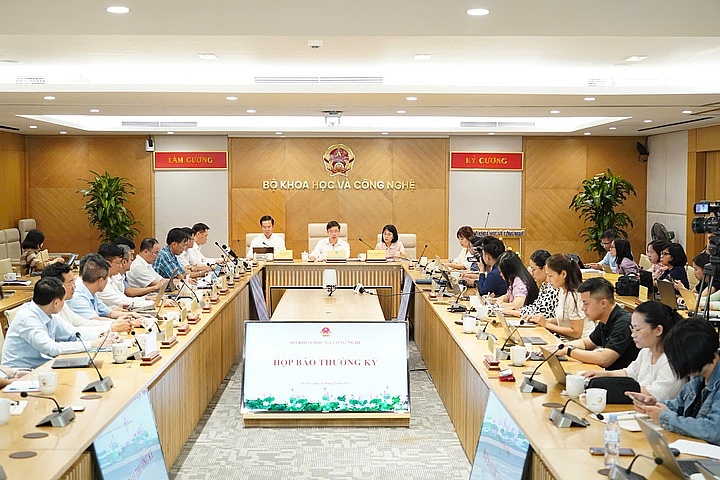
The press meeting on August 5. Photo: MST

Vietnam’s mobile network speed ranked 19th globally (148.64 Mbps), up 29 places. Total transactions on the national data integration and sharing platform (NDXP) reached 3.3 billion.

The VQII infrastructure quality index in June increased by 2.054 per cent, contributing an estimated $0.87 billion to GDP. Mobile game downloads in Vietnam in the first six months of the year reached 5.2 billion, and are expected to exceed 10.3 billion by the end of the year.

Revenue from major e-commerce platforms reached VND387.5 trillion ($15.5 billion), up 21.5 per cent. Vietnam’s AI economic scale is expected to reach $120-130 billion by 2040.

In July, the ministry consulted the government and the prime minister to issue one decree and three important decisions. Decree No.194/2025/ND-CP lays the legal foundation to promote connection and data sharing among state agencies, aiming to build a transparent and effective digital government.

Decisions No.1562/QD-TTg and No.1565/QD-TTg establish technical infrastructure and policies to ensure comprehensive digital transformation, and the personalisation of public services with individuals and businesses at the centre.

The ministry also coordinated with ministries and agencies to develop and submit to the government new decrees on supporting specialised officials in digital transformation and the public-private partnership mechanism in science and technology.

In addition, three new circulars were issued to specify regulations on information systems, and data and telecommunications management, enhancing the effectiveness of state management.

In August, the ministry will focus on developing and submitting to the government four draft laws: the amended Law on High Technology; the amended Law on Technology Transfer; amendments to the Law on Intellectual Property; and the Law on Digital Transformation for approval at the 10th session of the 15th National Assembly.

It will also develop, complete, and submit to the government 16 draft decrees guiding the implementation of four laws which were passed by the National Assembly at the 9th session of the 15th National Assembly.

The ministry will also develop a project to form large-scale strategic domestic technology enterprises to develop digital infrastructure, digital human resources, digital data, strategic digital technologies, and network security, and support and develop digital technology enterprises to reach out globally.

New decree positions sci-tech as key driver of regional development New decree positions sci-tech as key driver of regional development

The Vietnamese government issued a decree on June 12 to decentralise state management of science and technology to local people’s committees.

Vietnam launches science and technology exchange Vietnam launches science and technology exchange

Vietnam’s Ministry of Science and Technology (MoST) launched a science and technology exchange on June 30, aiming to boost technology transactions, and improve productivity and efficiency.

PPPs in science and technology pave way for private investment PPPs in science and technology pave way for private investment

New mechanisms are opening up the door for the private sector in science and technology and digital transformation in the form of public-private partnerships (PPPs).

Customs reform to prioritise high-tech and innovative businesses Customs reform to prioritise high-tech and innovative businesses

Au Anh Tuan, deputy director general of the Department of Vietnam Customs, outlines key changes to the Customs Law aimed at simplifying procedures and offering more incentives for high-tech, innovative, and semiconductor businesses, and helping to support supply chains and boost the startup ecosystem.

PPP rules to power Vietnam’s innovation PPP rules to power Vietnam’s innovation

Unprecedented regulations on public-private partnerships in the science and technology sector are expected to accelerate innovation and digital transformation across Vietnam’s business community.

Celebrating the growth and global readiness of ISHCMC's Class of 2025

With a graduating cohort of 109 students, ISHCMC achieved an impressive 98 per cent diploma pass rate, far exceeding the global average of 81 per cent.

This accomplishment underscores the school’s dynamic learning culture and dedication to supporting students on their individual educational journeys.

The Class of 2025 achieved an average score of 34 points, outperforming the global mean of 30.58. Nearly half the cohort, 44 per cent, attained scores of 35 points or higher, demonstrating a breadth of strong performance across the board.

Remarkably, six students achieved the prestigious 40+ points milestone, a reflection of their perseverance and the expert guidance of ISHCMC’s educators.

In addition to academic success, ISHCMC celebrates its robust culture of multilingualism and international-mindedness.

This year, 53 per cent of graduates earned the IB Bilingual Diploma, more than double the global average of 23 per cent. This achievement highlights the school’s dedication to fostering cultural fluency and preparing students to engage with a diverse, interconnected world.

“These results reflect more than numbers,” said Marco Longmore, head of school. “They represent countless stories of determination, creativity, and growth. Our students are developing the curiosity and resilience that will carry them into their future endeavours.”

Many graduates began their educational journey at ISHCMC as young learners in the Early Years Programme, progressing seamlessly through the IB continuum from the Primary Years Programme to the Middle Years Programme, and finally into the IB Diploma Programme (IBDP).

This pathway has allowed students to grow in confidence, critical thinking, and compassion, equipping them with the tools to contribute meaningfully to society.

The accomplishments of the Class of 2025 extend well beyond academics. Students have demonstrated leadership and empathy through initiatives such as Theory of Knowledge essays that challenge conventional thinking, and Creativity, Activity, Service (CAS) projects that create real-world impact-from environmental campaigns and social entrepreneurship ventures to artistic performances and mental health awareness drives.

Their CAS projects alone touched countless lives in Ho Chi Minh City and beyond, with efforts to promote sustainability, build community engagement, and support underprivileged groups.

Celebrating the growth and global readiness of ISHCMC's Class of 2025

ISHCMC’s educators have been integral to this success, providing not just academic instruction, but also mentorship and guidance. Teachers and IB coordinators have cultivated an environment where inquiry and innovation thrive, supporting students to pursue their passions and achieve their best.

The Class of 2025 is now preparing to join prestigious universities around the globe, from the United States and the United Kingdom to Canada, Australia, and beyond.

Their destinations include top-tier universities such as the University of California system, Imperial College London, University of Toronto, and Seoul National University.

Many graduates have also secured scholarships and awards, including a remarkable $56 million in scholarships, recognising their academic potential and community service contributions.

Yet, beyond their academic qualifications, these students take with them a mindset rooted from ISHCMC’s core values: curiosity, achievement, resilience, and empathy.

These qualities will enable them to lead, collaborate, and contribute meaningfully in a fast-changing world where adaptability and compassion are essential.

Celebrating the growth and global readiness of ISHCMC's Class of 2025

ISHCMC extends heartfelt congratulations to every graduate, their families, and the dedicated faculty who have supported them throughout this journey.

The school remains steadfast in its mission to inspire and empower young people to become confident, compassionate global citizens who will shape the future with vision and purpose.

As ISHCMC reflects on this milestone, it also looks forward, continuing to innovate and strengthen their programmes to ensure every learner is prepared to meet the challenges and opportunities of tomorrow’s world.

With plans to further enhance student wellbeing initiatives, invest in state-of-the-art learning spaces, and expand partnerships with global institutions, ISHCMC is building a future where excellence is not just achieved but sustained for generations to come.

International School Ho Chi Minh City (ISHCMC) is the first international school established in Ho Chi Minh City. ISHCMC offers a high-quality education for students aged 2 to 18 with three distinct pathways: the International Baccalaureate (IB) Diploma Programme, IB Courses, and the ISHCMC High School Diploma.

Accredited by globally recognised organisations such as CIS and NEASC, ISHCMC provides a learning environment where every individual is encouraged to explore their potential and grow holistically. Over the years, ISHCMC students have been accepted into seven of the world’s top 10 universities ranked by QS World University Rankings.

Learn more about ISHCMC:

* Website: https://www.ishcmc.com/

* Phone: (028) 3898 9100

* Email: admissions@ishcmc.edu.vn

The first steps: How early years at ISHCMC build a foundation for life The first steps: How early years at ISHCMC build a foundation for life

The Early Years programme at International School Ho Chi Minh City (ISHCMC) is designed to be the starting point for lifelong learning.

ISHCMC celebrates 30-year legacy ISHCMC celebrates 30-year legacy

International School Ho Chi Minh City (ISHCMC) held its 30th Anniversary Gala Event on December 2, a momentous occasion commemorating three decades of educational excellence and innovation.

ISHCMC celebrates 30 years with launch of new Student Grant Programme ISHCMC celebrates 30 years with launch of new Student Grant Programme

In celebration of 30years of providing exceptional education, the International School of Ho Chi Minh City (ISHCMC) has proudly announced the launch of its 30 Year Grant, designed to recognise and support students who exhibit exceptional talent, determination, and potential.

The US and China remain Vietnam’s largest seafood importers.

Vietnam’s seafood export revenue reached $6.22 billion in the first seven months of 2025, marking a 17.2% increase compared to the same period last year, according to the Vietnam Association of Seafood Exporters and Processors (VASEP).

In July alone, seafood export turnover totaled $971 million, up 6.1% year-on-year.

The United States and China remained Vietnam’s largest seafood importers during the period. Exports to China surged by 42.6% to nearly $1.33 billion, while shipments to the US rose 10.4% to over $1 billion.

Shrimp continued to be the key growth driver, with export value reaching $2.49 billion, up 23.6% year-on-year. Meanwhile, tra fish exports brought in $1.22 billion, increasing 11.1% from the same period last year.

VASEP forecasts that Vietnam’s total seafood export revenue for 2025 will reach between $9 billion and $9.2 billion.


In August, the Government revised the growth target from at least 8% (set in February) to 8.3-8.5%.

The Government has outlined five key tasks to achieve the GDP growth target of 8.3 per cent to 8.5 per cent this year, according to the Government News.

These tasks include boosting overall social investment, stimulating domestic consumption, promoting exports, fostering new growth drivers, and ensuring the smooth and effective operation of the two-tier local administration model nationwide.

In February, the Government set this year’s GDP growth target of at least 8 per cent. However, it decided to revise up the growth target to 8.3-8.5 per cent in August to sustain robust economic momentum amid global uncertainties.

The Government will focus on disbursing 100 per cent of the public investment capital planned for 2025 while mobilizing around VND1.5 quadrillion (over $57.2 billion) in private investment, and attracting over $18 billion in foreign direct investment (FDI).

The State Bank of Viet Nam is tasked with managing monetary policy proactively and flexibly, supporting interest rate cuts, and channeling credit towards production sectors to drive growth.

Efforts will be made to boost e-commerce growth by over 25 per cent, strengthen the “Vietnamese people prioritize using Vietnamese goods” campaign, tighten market management, and combat smuggling and trade fraud.

The tourism sector is expected to welcome 25 million international visitors and 150 million domestic tourists in 2025.

The Government will maximize the benefits of the existing Free Trade Agreements (FTAs), accelerate negotiations on new FTAs with the Middle East, India, and Africa, and address import-export bottlenecks.

Measures will also be taken to expedite customs clearance, reduce logistics costs, and prioritize agricultural exports.

Priority will be given to advancing science and technology, fostering innovation, accelerating digital transformation, and promoting the digital, green, and circular economy.

The Government also plans to develop cultural industries, artificial intelligence (AI), big data, and improve capital market development policies to upgrade Vietnam’s stock market classification.

The Government will continue streamlining the administrative apparatus to enhance efficiency and effectiveness, accelerate digital transformation in governance, develop a high-quality grassroots-level workforce, and ensure sufficient resources for operating the two-tier local administration model.

Additionally, ministries, sectors, and localities have been instructed to develop detailed growth scenarios for the remaining months of 2025 and submit them to the Ministry of Finance by August 15, 2025. They are also required to proactively address challenges and propose timely solutions to achieve and surpass the assigned targets.

Earlier, Prime Minister Pham Minh Chinh stressed that the growth target is “not impossible” and must be pursued decisively.

The second half of the year offers a seasonal advantage, with heightened domestic and international demand expected during the year-end shopping period. The government is working to ensure these trends are translated into real economic gains.

Notable increases recorded in food and foodstuffs, cultural and educational products, and household devices and equipment.

Vietnam’s total retail sales of goods and consumer service revenue reached over VND3.99 quadrillion (approximately $151 billion) in the first seven months of 2025, marking a 9.3% year-on-year increase, according to the National Statistics Office (NSO).

Retail sales alone accounted for VND3 quadrillion ($114 billion), representing 76.4% of the total and rising 7.8% from the same period last year. Notable increases were recorded in food and foodstuffs, and cultural and educational products, up 9.4%; garments, rising 6.4%; and household devices and equipment, surging 5.5%.

Revenue from accommodation and food services surged 15% year-on-year to VND481.9 trillion ($18.3 billion), while tourism and travel services saw a sharp increase of 20%, reaching VND52.8 trillion ($2 billion).

Other service revenues totaled VND409.1 trillion ($15.5 billion), reflecting a 12.4% rise year-on-year.

In July alone, total retail sales and service revenues hit VND576.4 trillion ($21.9 billion), up 9.2% compared to the same month last year.