The Ministry of Finance (MoF) is seeking government approval of a decree detailing the Law on Corporate Income Tax (CIT), adopted by the National Assembly two months ago. As it stands, the decree is expected to be passed by the government this month and scheduled to take effect on October 1. It will apply for the period of calculating CIT in 2025.

CIT specifics address smaller firms
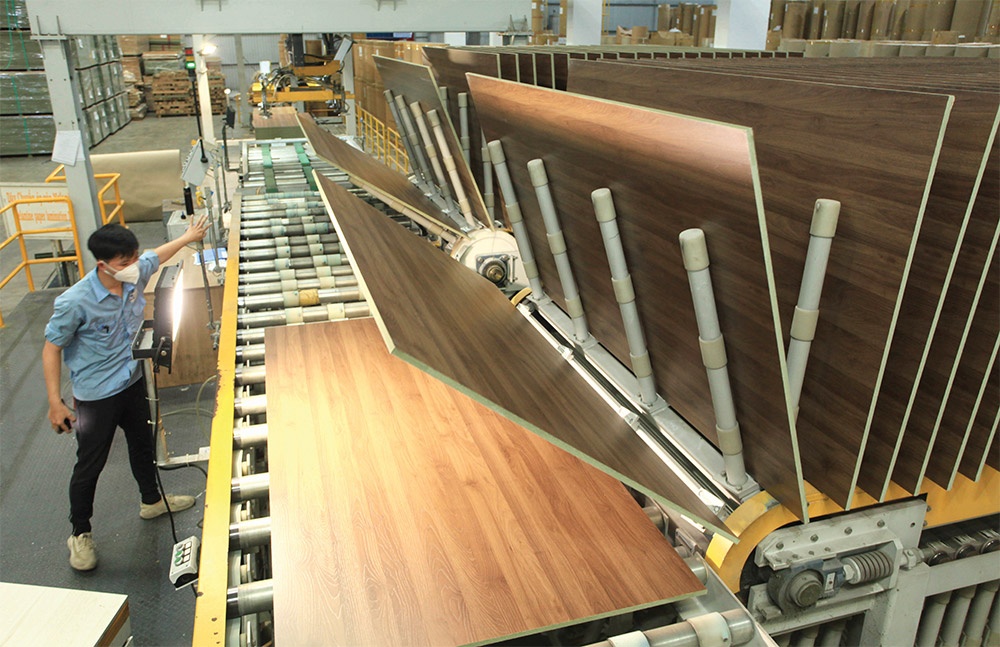
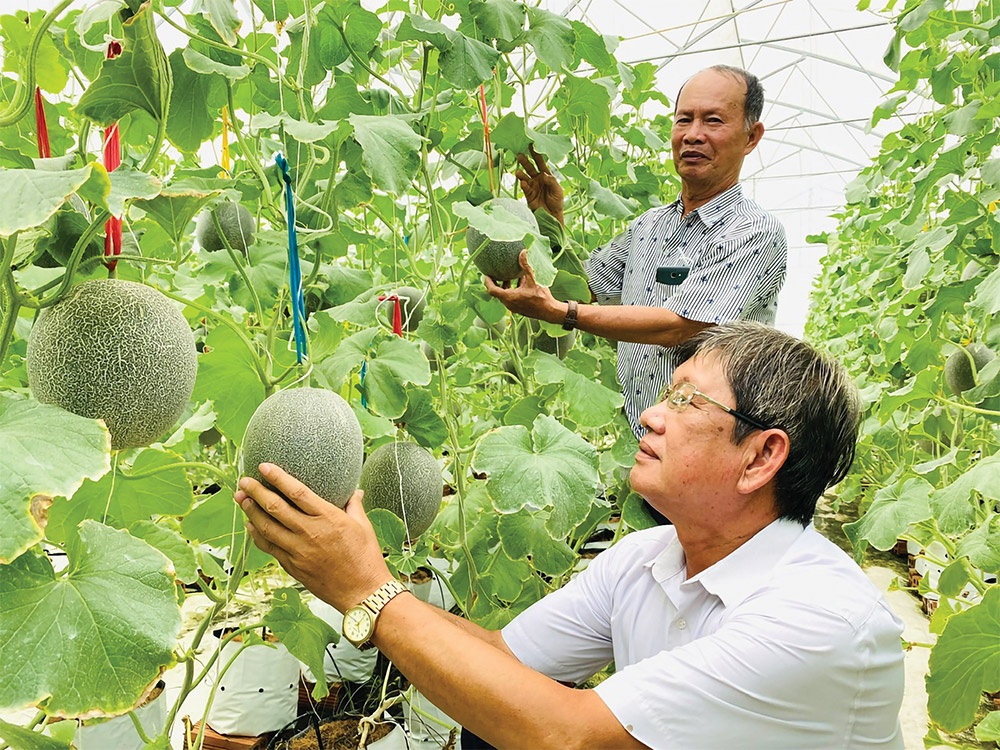
A corporate income tax reduction would save smaller companies some cash, Photo: Le Toan

According to the MoF, the decree is expected to create a firm legal framework for the implementation of the CIT law, boosting the domestic business climate in a more transparent manner, with more support provided for micro- and small-sized enterprises, and promotion of investment into the sectors of agriculture, technology, and environment.

One of the biggest highlights in the draft decree is that it covers some specific policies, such as the supplementation of regulations for the application of lower CIT. Under Article 10 of the draft, the CIT common tax rate is 20 per cent. However, a rate of 15 per cent shall be applied to micro-sized firms with total annual revenue not exceeding VND3 billion ($120,000), and a rate of 17 per cent shall be given to small firms with total annual revenue between that figure and VND50 billion ($2 million).

“The total revenue used as the basis for determining whether a business is eligible for the 15 or 17 per cent CIT rates includes total revenue from sales of goods, provision of services, financial activities, and other income as reported in the appendix on business performance results attached to the CIT finalisation return for the immediately preceding tax year,” the draft decree read.

Under the existing Law on Support for Small- and Medium-sized Enterprises, small enterprises refer to those which employ 10-49 people, and has a total annual revenue and total capital of VND50 billion ($2 million) and VND20 billion ($800,000), respectively. Micro-sized enterprises refer to those which utilise fewer than nine employees, and has a total annual revenue and total capital of VND3 billion ($120,000).

Businesses in the oil and gas industry are subject to CIT rates ranging 25-50 per cent, depending on each contract. Firms which engage in prospecting, exploration, and exploitation of certain mineral resources, including platinum, gold, silver, tin, and other rare and precious resources, are subject to a rate of 50 per cent.

Vietnam currenrly has nearly one million enterprises, of which as many as 97 per cent are micro, small, and medium-sized enterprises that are often cash-strapped and lack output markets, with weak competitiveness.

The country has set a target of two million enterprises by 2030, with efforts to be made for private enterprises to create 58 per cent of GDP, 40 per cent of state budget revenue, and 85 per cent of labourers.

In the first seven months of 2025, the number of businesses registering to halt performance hit 88,600, up 13.6 per cent on-year. Moreover, 41,500 enterprises halted operations to await dissolution procedures, up 16.7 per cent on-year; and 14,300 businesses completed such procedures, up 20.5 per cent on-year. On average each month, 20,600 enterprises left the market.

Nguyen Cong Bang, director of Cong Bang Foodstuff Co., Ltd. based in the outskirt of Hanoi, told VIR that currently like thousands of other enterprises, his company is faced with major difficulties.

“Prices of input materials like sugar, gas, beans, and cooking oil have increased by an average 15 per cent over the past seven months, while we still have to pay many types of taxes including a CIT rate of 20 per cent costing about VND25 million ($1,000) per month,” said Bang, whose company employs 40 people.

“If the CIT is reduced to 17 per cent, we can save about VND720,000 ($30) a month and VND8.64 million ($350) a year. The sum is not so big, but it is a testament to the state’s support to small-sized enterprises like us,” Bang said.

However, according to Tran Hai Van, director of Red Lotus Trading Co., Ltd. in Hanoi, specialised in trading home appliance products, there is an urgent need to reduce assorted taxes including CIT for smaller enterprises that are often vulnerable to shocks in the market. “For example, a CIT reduction can be offered to those with total revenue of below VND10 billion ($400,000) a year and this should be divided into different levels for application,” Van said. “For instance, a rate of 15 per cent is offered to a revenue of more than VND5 billion ($200,000) and a rate of 10 per cent is offered to a revenue of below VND5 billion ($200,000).”

SABECO turns sustainability aspirations into concrete action
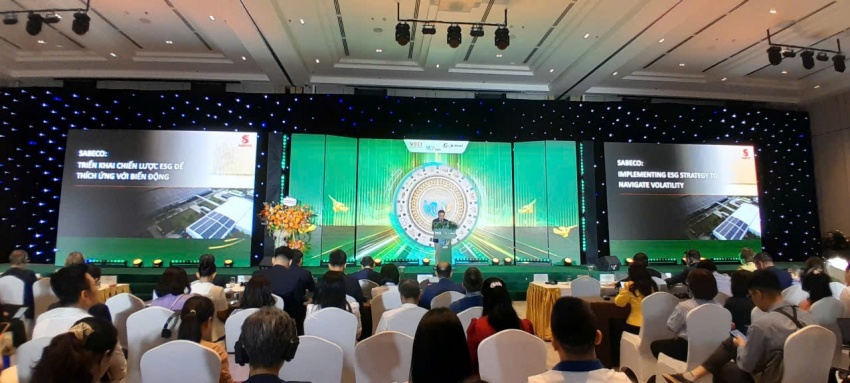
SABECO representative Nguyen Hoang Giang highlights the company’s commitment to translating ESG aspirations into measurable actions during VCSF 2025

Nguyen Hoang Giang, general director of Saigon Beer Trading One Member Co., Ltd. (SATRACO) and a member of SABECO’s executive committee, shared the company’s ESG journey, considered a prime example of translating sustainability commitments into measurable action.

In his keynote, Giang underlined that the world is moving in a state of volatility and uncertainty. Climate change, supply chain disruptions, inflationary pressures, and shifting consumer behaviour require businesses not only to recover but also to reshape their strategies for the future. “At SABECO, we believe ESG is not merely a tool for adaptation, but a strategic foundation for sustainable, proactive, and responsible growth,” he remarked.

With a 150-year brewing legacy, SABECO has become a pioneer in Vietnam’s beer industry. The company currently operates 25 breweries, covers more than 200,000 outlets, and exports to over 35 countries. Yet, according to Giang, scale is not the ultimate pride: “Our true pride lies in redefining our mission not just brewing beer, but contributing to Vietnam’s sustainable development.”

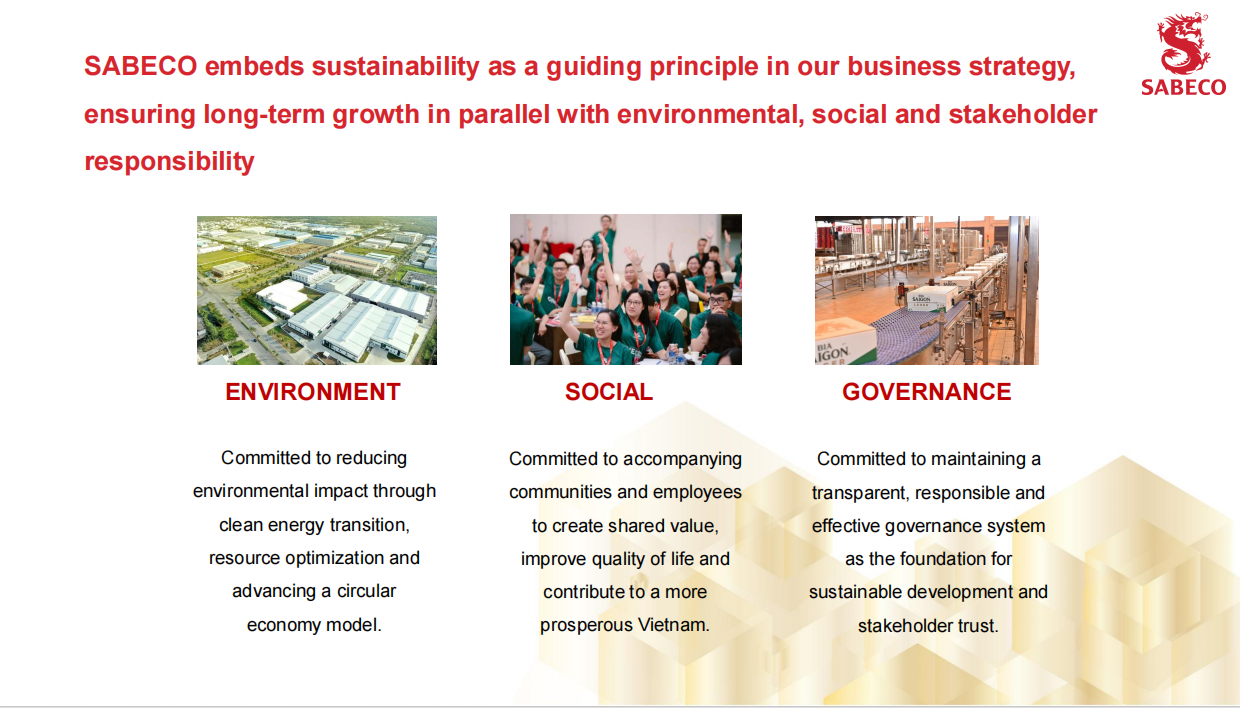
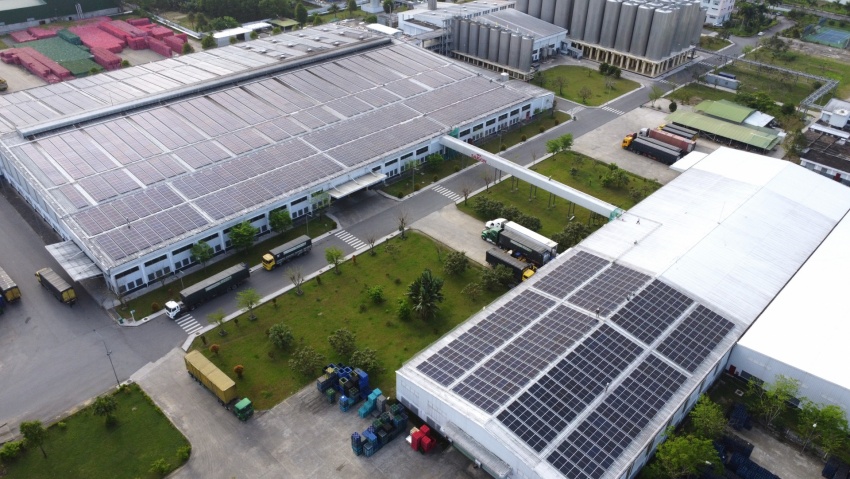
SABECO has made tangible progress under its ESG pillars. By 2024, 64 per cent of its breweries had installed solar power systems; 40.54 per cent of energy in beer production came from renewable sources; 64.22 per cent of waste was recycled or reused; water consumption per unit of product was reduced by 7.3 per cent compared to 2023; and total greenhouse gas emissions fell by 9.3 per cent against the 2023 baseline.

These are the first steps in SABECO’s long-term roadmap towards Net Zero 2050, with a medium-term milestone of cutting 42 per cent of emissions by 2030. “We do not wait for perfect conditions to act. Transformation must start from within, step by step, with persistence and clear goals,” Giang emphasised.

SABECO turns sustainability aspirations into concrete action

On the social front, SABECO considers the community inseparable from its development strategy. Recent initiatives have had a tangible impact: installing over 109km of solar-powered streetlights across 34 provinces; supporting 37,500 people through the “63 Provinces – One Tet” campaign; and building 30 community sports playgrounds. “A business can only be truly sustainable when its surrounding community is also sustainable. We want to co-create shared value with the people, ensuring no one is left behind,” Giang noted.

Alongside environment and society, SABECO sees transparent governance as the cornerstone of sustainability. All its breweries have achieved ISO 22000 for food safety and ISO 14001 for environmental management. Its strategic suppliers are evaluated on ESG criteria and comply with the Code of Conduct. The company has also inaugurated its Beer Research & Development Centre, designed not only to advance technology but also to embed sustainability into innovation.

SABECO turns sustainability aspirations into concrete action
Rooftop solar at Saigon Quang Ngai Beer Factory

Moreover, SABECO partners with PRO Vietnam and the Ministry of Natural Resources and Environment on extended producer responsibility, while maintaining transparent whistleblowing mechanisms and strict anti-corruption procedures. As Giang underlined, without a foundation of transparent, responsible governance, ESG commitments risk remaining symbolic.

In 2024, SABECO published its first standalone sustainability report aligned with global GRI standards. The company also established a board-level sustainability and risk governance committee and embedded ESG metrics into KPIs across multiple functions. These steps reflect SABECO’s determination to convert commitments into a system of measurable actions.

At VCSF 2025, SABECO’s story resonated strongly with the forum’s theme. While many companies still grapple with balancing growth targets and sustainability requirements, SABECO has defined a clear path: treating ESG as an operating philosophy, a way of defining value, and measuring success.

“When development is built on an ESG foundation, no one is left behind. And the value created will be sustainable not only for the company but also for the nation,” Giang concluded.

HONG KONG SAR – Media OutReach Newswire – 21 August 2025 – Hongkong Land has launched the city’s first AI-powered intelligent facility management platform, the IFMCT, setting a new industry standard for commercial property management and demonstrating the Company’s commitment to PropTech innovation. Following a successful pilot at Alexandra House, which earned the Industry Excellence Award for best practice, the IFMCT has been scaled to Chater House and Exchange Square, demonstrating its adaptability. With proven results, Hongkong Land is now preparing to roll out the platform across its entire Central Portfolio by 2026.
Michael Smith, Chief Executive, Hongkong Land, said:” This pioneering initiative stands as a testament to Hongkong Land’s leadership in delivering forward-thinking sustainable solutions, highlighting the Group’s long-standing culture of innovation and our commitment to creating lasting value for all our stakeholders. We’re proud of the platform’s success in Hong Kong and look forward to extending its impact across our regional portfolio.”
The IFMCT unifies over 20 standalone building systems into a single platform – integrating the Building Management System (BMS), AI-driven Heating, Ventilation, and Air Conditioning Systems (HVAC), thermal comfort control, energy optimisation, and soft services such as cleaning, vendor management, procurement and tenant wellness monitoring. By leveraging real-time monitoring, advanced AI analytics, and 4D digital twin visualisation, the advanced system enhances operational efficiency and minimises disruptions, improving reliability and extending asset lifecycles.
The IFMCT drives operational excellence, accelerating decarbonisation efforts through close collaboration with tenants
The IFMCT automates workflows to optimise both hard and soft services, improving daily building operation as well as tenant experience. Shifting from traditional, reactive maintenance to a predictive, proactive model, the platform harnesses AI-powered health analytics to detect early signs of performance decline, preventing service interruptions.
For instance, Air Handling Units (AHUs) are managed like people: healthy units skip routine check-ups, while symptomatic ones receive priority servicing. This condition-based approach resulted in a 16% reduction in AHU maintenance effort after one year, cutting maintenance frequency from monthly to biannual, clearly demonstrating the tangible benefits of intelligent servicing. Other measurable outcomes include a 66% automation rate for work orders, and an 80% reduction in time needed to retrieve asset documentation. The platform has significantly decreased the volume of alarm monitoring calls to both tenants and vendors, streamlining communication.
As climate resilience takes on greater urgency, the IFMCT elevates the adaptability of buildings and operations through intelligent energy management. The platform balances energy demand and adjusts heating and cooling systems in response to forecasted weather patterns, helping Hongkong Land and its tenants reduce energy consumption and accelerate decarbonisation efforts.
Hongkong Land to scale the IFMCT regionally following successful pilot and Central Portfolio expansion
The IFMCT’s standardised data structure enables seamless integration across markets, supporting Hongkong Land’s regional expansion of intelligent property management solutions towards the ultra-premium integrated commercial properties strategy. Building on its success in Hong Kong, the platform is set to be deployed at Westbund Central in Shanghai, a development offering high-quality retail spaces, office towers, residences, hotels, and arts and cultural venues. This cross-market implementation reinforces Hongkong Land’s position as a regional leader in building management technology.

The issuer is solely responsible for the content of this announcement.

Trung An High-Tech Agriculture JSC is bustling with preparations to deliver an order of 2,500 tonnes of ST25 and Japonica rice to Japan in October, following the successful export of 500 tonnes of low-emission rice to the country in June.

Pham Thai Binh, chairman of the Board of Directors, said, “Our products meet international quality certifications, as well as Japan’s Organic JAS certification. This provides a significant competitive advantage, as Japanese consumers are willing to pay a premium for clean, clearly certified products with transparent traceability and stringent standards.”

Vietnam is attempting to meet global standards across production areas, safety, quality, and more, photo Le Toan

The Vietnam Trade Office in Osaka said that Japan has a high demand for safe and organic food products that are strengths of Vietnam, including coffee, cashew nuts, tropical fruits, and frozen vegetables. Additionally, with over 634,000 Vietnamese living and studying in Japan, accounting for almost one-fifth of the total Vietnamese diaspora, this represents a significant niche market that helps boost the consumption of Vietnamese agricultural products.

Besides rice, other agricultural products such as cashew nuts, dragon fruit, coconuts, fresh lychees, and dried fruits have become widely available in major Japanese retail chains like AEON, Don Quijote, and Ito Yokado. Notably, the 2025 lychee season saw approximately 200 tonnes of fresh lychees exported to Japan, distributed through supermarkets as well as online platforms.

In the first quarter of 2025 alone, Japan became Vietnam’s fourth-largest fruit export market, with a 22.8 per cent increase compared to the same period in 2024.

Efforts to promote exports to key and emerging markets alike are being supported by state agencies such as the Ministry of Agriculture and Environment (MoAE) and the Ministry of Industry and Trade.

Last month, an action plan was issued regarding promotion of domestic and international trade activities for the rest of the year. Minister of Industry and Trade Nguyen Hong Dien requested specialised units to provide export businesses with updated information on markets, trade policies, consumer trends, and technical requirements of partners in markets with free trade agreements with Vietnam.

“It is a must to coordinate with relevant agencies and organisations to enhance and diversify trade promotion activities to support import and export. This includes implementing large-scale trade programmes tailored to specific industries in key markets,” Minister Dien said.

According to statistics from the MoAE, Vietnam currently exports agricultural products and food to 200 countries and territories. The sector’s export turnover reached $39.7 billion in the first seven months of the year, marking a 14.7 per cent increase over the same period in 2024.

This growth was distributed across various sub-sectors. For instance, agricultural products saw a 17 per cent increase to $21.5 billion, while forestry products grew 8.6 per cent to $10.4 billion, aquatic products climbed 13.8 per cent to $6.1 billion, and livestock products surged 22.1 per cent to $339.2 million.

According to Truong Xuan Trung, first secretary and head of the Vietnam Trade Office in the United Arab Emirates, the UAE’s total annual agro-forestry-fishery trade volume is around $200 billion, yet Vietnam currently accounts for less than 10 per cent of this figure.

“The UAE and other member states of the Gulf Cooperation Council (GCC) operate under a unified customs system. This means that once Vietnamese goods enter the UAE, they can circulate freely to other GCC nations without facing additional tariffs, a notable advantage for market expansion,” Trung explained.

However, he cautioned that this framework could also pose risks. If a Vietnamese product fails to meet UAE standards, all six GCC countries would simultaneously impose strict inspection measures, leading to significant delays. “Exporters to the UAE and GCC must therefore prioritise quality control and ensure compliance with food safety and pesticide residue regulations,” he stressed.

In the European market, Vietnam’s agricultural counsellor in the EU, Tran Van Cong, noted considerable untapped potential for increasing agro-forestry-fishery exports. Nevertheless, the share of processed goods with high added value remains modest, and Vietnam still lacks sustainable distribution networks.

To unlock the EU’s potential, he recommended expanding raw material zones that meet EU standards, as well as establishing disease-free production areas to facilitate negotiations for market access for Vietnam’s animal products. “A long-term communication strategy is essential to counter negative publicity about Vietnamese seafood in the EU, while continuously reviewing and upgrading quality, food safety, and sustainability standards to align with EU benchmarks,” Cong added.

Asia Ingredients Group (AIG) is making significant research and development investments to diversify its deeply processed product portfolio and adapt to changing consumer trends. It is intensifying trade promotion efforts, forging links with global distribution networks, and expanding into Eastern Europe, the Middle East, and Latin America.

“AIG products are now available in over 50 countries and territories,” the representative said. “In the long term, we are pursuing a dual strategy, consolidating core products with global competitive advantages while expanding organic raw material areas, developing premium processed agricultural lines, and increasing technological applications across our factories.”

SYDNEY, Aug. 21, 2025 /PRNewswire/ — Manhattan Associates Inc. (NASDAQ: MANH) has promoted Raghav Sibal to Vice President, APAC, a newly expanded role that reflects the company’s commitment to supporting rising demand across the region. The move follows a standout year of growth, with cloud subscription revenue in APAC rising 49% year-on-year in 2024 and services revenue up 21%, reflecting the region’s growing appetite for cloud-first, AI-enabled supply chain solutions.

“Over the past 14 years, Raghav has played a pivotal role in establishing Manhattan Associates’ strong foundation and continued growth in Australia and New Zealand. With the APAC region undergoing rapid transformation and expansion, the time is right to elevate his role,” said Eric Clark, President and CEO at Manhattan Associates. “He brings the operational expertise, customer-first mindset and regional insight needed to accelerate our vision for unified supply chain commerce across Asia-Pacific.”

With more than two decades at Manhattan Associates, Sibal brings deep operational experience to the position, having worked across both the US and Australian markets, leading some of the company’s most complex global implementation programs. Since taking on leadership of the Australia and New Zealand business in 2011, he has overseen significant growth, built a high-performing local team, and helped position Manhattan as a trusted technology partner for leading retailers, distributors and logistics providers across the region.

“APAC is an incredibly diverse region, with each market presenting unique challenges and opportunities,” commented Sibal. “As supply chains continue to evolve and digital transformation accelerates, I’m excited to work closely with our teams, partners and customers across the region to help them unlock new levels of efficiency, resilience and customer experience.”

Manhattan Associates’ APAC operations service emerging opportunities in China, Southeast Asia, and India, as well as more established markets in Japan, Australia and New Zealand.

For more information about Manhattan Associates, visit www.manh.com.au. Receive up-to-date product, customer and partner news directly from Manhattan Associates on X, LinkedIn and Facebook.

For more information, please visit www.manh.com

One of the latest initiatives is a three-year project led by food ingredients manufacturer BENEO, in partnership with the non-governmental organisation Rikolto and climate-tech company CarbonFarm, announced in late July.

Green deals help level up agriculture
Government support for low-carbon agriculture makes it an ideal environment for collaboration, Photo: Le Toan

Backed by a €800,000 (nearly $940,000) grant from the Flanders government in Belgium under the Flanders International Climate Action Programme, the initiative aims to encourage sustainable rice production in Vietnam.

The subsidy is used to cover the costs of training farmer cooperatives, monitoring and validating reductions in emissions and water consumption, as well as the separate logistics and processing of the final Sustainable Rice Platform (SRP)-verified rice.

Roland Vanhoegaerden, operations managing director for Speciality Rice Ingredients at BENEO, said, “Global demand for sustainable rice is rising, with SRP-certified supply now covering nearly 50,000 hectares and available in over 20 countries across Europe, Asia, and North America. As one of the world’s top rice exporters, Vietnam holds strong export potential but lacks verified sustainable supply chains.”

BENEO, Rikolto, and CarbonFarm are working to build an innovative value chain market model by connecting small-scale farmers to international markets and creating added incentives for cultivating SRP-verified rice.

Trained farmers are granted guaranteed purchase quantities for their SRP-verified rice. BENEO’s production site in Belgium will process at least 10,000 tonnes of this rice into high-quality starch, flour, and protein ingredients for the global food and pet food industries.

The project helps farmers meet international sustainability benchmarks, strengthening Vietnam’s positioning as a trusted supplier of SRP-certified rice. It also equips cooperatives to support farmers in scaling sustainable production. At the same time, successful business cases will be documented to inspire wider adoption of sustainable practices.

Also last month, the Dutch Fund for Climate and Development (DFCD) also approved origination support to HUSK, a pioneer in biochar-based fertilisers, to accelerate the company’s expansion in Vietnam.

DFCD provides funding to scale HUSK’s production capacity, invest in research and product development, and bring new biochar-based fertiliser formulations to both markets. This enables HUSK to prototype tailored solutions for major crops and support broader market adoption.

Nguyen Anh Tuan, general manager of HUSK Vietnam, said, “We are implementing a comprehensive scale-up plan in Vietnam, with a key component being the establishment of a new production facility. This plant will use locally sourced rice husk to manufacture biochar-based fertilisers tailored for Vietnam’s key agricultural regions.”

Alongside this, HUSK is forming research partnerships with leading institutions such as Can Tho University, Nong Lam University, and others to test and refine its products for crops like rice, coffee, durian, and bell pepper under real farming conditions.

Additionally, the company is also expanding its market presence through demonstration farms, farmer training, and direct engagement, while building strong distribution and offtake partnerships with cooperatives and agribusinesses.

Phuc Sinh Corporation also secured a funding of $15 million from the Dutch Entrepreneurial Development Bank in early April. Chairman Phan Minh Thong said, “With this funding, Phuc Sinh can raise its production capacity, invest in agricultural projects, apply advanced tech to the supply chain, and increase the value of products.”

According to data by the Ministry of Agriculture and Environment, the export value of agro-forestry-fishery products reached $39.68 billion in the first seven months of the year, up 14.7 per cent on-year. Key agricultural products recorded significant value growth than last year – coffee exports soared by 65.1 per cent to $6 billion, while cashew nut exports increased by 17.4 per cent to $2.79 billion.

Following that is pepper, with an export turnover of $1 billion, an on-year increase of 30 per cent. Rice exports saw a 15.9 per cent decrease in value to $2.81 billion due to a significant 18.4 per cent drop in price.

Vanhoegaerden from BENEO noted that the Mekong Delta faces severe climate risks yet remains vital to global rice trade. In this case, Rikolto, leveraging its long-standing partnership with local authorities, leads training for Vietnamese farmers, while CarbonFarm will deploy digital and satellite tools to support data collection and more.

“For these partners, Vietnam presents the opportunity to pilot scalable solutions that reduce environmental impact and support farmers while contributing to national and green goals,” Vanhoegaerden said.

TOKYO, Aug. 18, 2025 /PRNewswire/ — Ricoh Asia Pacific today announced the launch of AI Learning Week, a region-wide internal initiative designed to equip employees with practical AI capabilities, accelerate Microsoft Copilot adoption, the use of custom AI agents, and strengthen Ricoh’s leadership in shaping the future of work through responsible, applied artificial intelligence.

Ricoh Asia Pacific launches AI Learning Week 2025—an internal initiative, co-sponsored by Microsoft and Talogy, to accelerate AI adoption and shape the future of work.

Running from 18–22 August 2025 and co-sponsored by Microsoft and Talogy, a leading talent management solution provider, AI Learning Week will bring together over a thousand employees across Ricoh’s Asia Pacific operations for hands-on sessions, leadership panels, and solution showcases. The initiative reflects Ricoh’s belief that empowering employees with AI fluency is key to delivering lasting value for customers and deepening strategic technology partnerships.

“AI Learning Week isn’t just about upskilling—it’s about readiness,” said Kei Uesugi, Regional Director of Ricoh Asia Pacific. “By investing in our people and working alongside Microsoft, we are building the internal strength required to lead AI transformation across the region.”

A Strategic Framework for Regional Scale

Ricoh Asia Pacific’s AI strategy is built around a three-tiered innovation framework that supports varying levels of customer AI maturity and business need. This includes:

  • Pre-Configured Solutions such as AI-enabled multifunction devices, intelligent document processing, and workflow automation
  • Enablement and Advisory Services to help organisations adopt AI responsibly and effectively
  • Advanced Applications using AI agents, large language models, and vertical-specific solutions tailored to customer challenges

This structure enables Ricoh to scale innovation efficiently across markets while encouraging local adaptation and capability-building.

Local Innovation, Regional Impact

Across the region, Ricoh operating companies are already delivering on this strategy through market-led innovation and practical application.

In Hong Kong, Ricoh has launched the Ricoh InnoAI Programme. Developed in partnership with Cyberport and the Ricoh Software Research Center Beijing, Ricoh InnoAI offers AI startups and enterprise partners access to a purpose-built R&D centre, commercialisation pathways, and advanced infrastructure to accelerate innovation.

“Through InnoAI, we are building a business-ready AI ecosystem, anchored in Hong Kong, ready to scale and support customers across the region”, said Ricky Chong, Managing Director of Ricoh Hong Kong. “We are excited to be working at the intersection of technology, talent, and trust; to attract new talent, and help our customers grow.”

In New Zealand, Ricoh has solidified its position as a leader in enterprise AI adoption and Microsoft Copilot deployment. As a certified Microsoft Solutions Partner across Data & AI, Infrastructure, Modern Work (SMB), and Security (SMB), Ricoh New Zealand has met Microsoft’s highest standards for capability, performance, and customer success. This recognition enhances Ricoh’s credibility in the Microsoft ecosystem and reinforces its role as a trusted advisor to customers seeking secure, scalable, and productivity-enhancing solutions.

Building on this foundation, Ricoh New Zealand has implemented structured Copilot programmes across key business functions—including finance, marketing, customer operations and digital services. These deployments are supported by comprehensive AI readiness assessments that help define business needs, identify adoption barriers, and prioritise use cases. The insights gained feed into enablement frameworks and real-time feedback loops that drive continuous improvement, both internally and for Ricoh’s customers.

This hands-on experience—underpinned by its Solutions Partner credentials—has positioned Ricoh New Zealand as a strategic contributor to Ricoh’s go-to-market model in the Asia Pacific region with Microsoft, translating product capability into practical, scalable business outcomes.

Leo Liu, General Manager, Microsoft Hong Kong and Macau, added: “Microsoft is delighted to collaborate with Ricoh for AI Learning Week, empowering teams across the Asia Pacific region to unlock the full potential of AI Agents. Through hands-on sessions and real-world demonstrations, we are committed to supporting Ricoh in harnessing the power of Microsoft Copilot and custom AI agents. Our aim is to drive innovation, enhance productivity, and transform the way work gets done—today and for the future.”

As Ricoh continues to invest in its people, platforms and partnerships, AI Learning Week serves as a timely demonstration of how strategic enablement at scale can power the next phase of workplace transformation across Asia Pacific.

For further information, please visit www.ricoh.com

Amid rising trade tensions and the resurgence of economic nationalism, Vietnam is rapidly emerging as a key hub for firms aiming to reduce tariff exposure and enhance operational efficiency. This transformation goes beyond relocating production, it reflects a broader reconfiguration of the country’s industrial and logistics landscape.
Businesses navigating tariffs and industrial opportunity
Dennis Yeo, head of Investor Services, Logistics, and Industrial at Cushman & Wakefield Asia-Pacific

The revised US tariff framework has prompted a wave of global business recalibration. Initially, Vietnam faced challenges when early drafts proposed a 46 per cent rate on its exports. However, after negotiations, the rate was reduced to 20 per cent, restoring investor confidence and reigniting momentum.

Tariffs are becoming a structural element of global trade. Rather than resisting them, companies are adapting by optimising supply chains to absorb these new costs.

Despite the added burden, businesses are beginning to treat tariffs as part of the new normal in an increasingly protectionist world. Companies will have no alternative but to accept tariffs as part of the cost and make their supply chain more efficient.

Following an initial pause, investment activity in Vietnam has resumed, particularly from smaller firms in the ASEAN region seeking new growth opportunities.

With over two decades of foreign direct investment in manufacturing, the nation offers a well-established industrial ecosystem. Its infrastructure, skilled labour force, and export-friendly policies provide a competitive edge over regional peers. Participation in multiple free trade agreements enhances market access, while ongoing administrative reforms improve the ease of doing business.

Standing out

For many multinational corporations, relocating operations to Southeast Asia has become essential. While expansion beyond their domestic market was already underway due to technological advancement and industrial maturity, tariff pressures have accelerated the shift.

Other economies in the region are also upgrading infrastructure and streamlining regulations to attract investment. However, Vietnam maintains a distinct advantage due to its low labour costs, favour access to major sea lanes, and stable economic environment.

According to our recent report 2025 Waypoint: Global Industrial Dynamics, which evaluated over 120 markets worldwide, Vietnam stands out as one of the few countries to rank among the most affordable markets globally for these key site selection factors. Although industrial rents in 2025 have increased by 70 per cent compared to 2019, actual costs remain highly attractive relative to regional peers. As of end 2024, average logistics real estate rents are approximately $5.30 per sq.m per month in Hanoi and $4.90 per sq.m per month in Ho Chi Minh City.

Logistics and manufacturing operations remain heavily reliant on human capital. A large, cost-effective labour force is a critical factor influencing site selection and operational strategy, from determining which processes to localise to the level of automation investment.

In Vietnam, labour costs are currently less than 25 per cent of the global median wage, placing the country among the most affordable labour markets in the Asia-Pacific region.

Meanwhile, electricity demand in modern logistics facilities is rising, driven by automation systems, smart management platforms, advanced material handling equipment, and the growing adoption of electric vehicles. As a result, operating costs are becoming an increasingly important consideration in decisions. Vietnam maintains its competitive edge, with industrial electricity prices among the lowest globally, only higher than Indonesia and Nigeria.

These advantages make the country particularly attractive to multinational corporations seeking to expand operations. The shift is no longer limited to final assembly, many firms are now considering full supply chain migration to capitalise on lower costs and policy stability, particularly in relation to transshipment tariffs.

One emerging opportunity lies in transshipment tax optimisation. Bonded warehouses and foreign trade zones allow goods to be stored without incurring tariffs until they enter the domestic market. These models offer flexibility and cost savings, especially for companies managing complex cross-border flows.

The most visible impact of this transformation is unfolding in the industrial real estate sector. Demand for industrial parks, logistics hubs, and warehouses is surging, particularly in key regions such as Ho Chi Minh City, Haiphong, Bac Ninh, and Binh Duong. This growth is being driven by the steady diversification of global supply chains.

Several milestones underscore Vietnam’s growing appeal during the 2018 trade war. One notable example is the launch of BW Industrial Development, a joint venture between global private equity firm Warburg Pincus and local developer Becamex IDC, which marked a turning point in the country’s industrial real estate landscape. This initiative significantly expanded the supply of ready-built factories and logistics infrastructure, signalling strong international confidence in Vietnam’s long-term potential.

That same year, the country continued to attract major global manufacturers. Samsung, for example, had already invested over $17 billion by 2018, establishing large-scale production facilities that became magnets for supporting industries. The presence of such industry leaders has helped elevate Vietnam’s position in global supply chains and encouraged a wave of follow-on investment. These developments align with the nation’s ambition to become a leading logistics and distribution hub in the region.

A decisive role

Further reinforcing this momentum, reports from Cushman & Wakefield and other consultancies confirm the country’s rising prominence in Southeast Asia’s industrial property market. The continued presence of global logistics firms and sustained foreign direct investment into industrial areas highlights the strength of this trajectory.

Today’s supply chains are no longer defined solely by physical assets. They are increasingly digital, data-driven, and automated. As more companies shift operations to Vietnam, they are also deploying advanced logistics technologies such as smart warehousing, reverse logistics systems, and AI-powered inventory management.

Tools like Internet of Things-enabled monitoring and cloud-based logistics platforms are helping businesses navigate trade volatility and improve operational performance. While adoption is still scaling, the presence of international firms is accelerating the country’s technological maturity.

One critical area is talent development. As supply chains become more automated and data-driven, demand for a digitally-skilled workforce will intensify. Investment in vocational training, STEM education, and industry-academia collaboration will be essential to meet the needs of advanced manufacturing and smart logistics operations.

At the same time, regulatory transparency and institutional efficiency will play a decisive role in shaping investor sentiment. Streamlined permitting processes, consistent enforcement of trade policies, and improved land-use planning can help reduce friction and accelerate project timelines.

Environmental sustainability will also become a competitive differentiator. As global corporations align with environmental, social, and governance commitments, Vietnam’s ability to offer green-certified industrial areas, renewable energy integration, and low-carbon logistics solutions will influence site selection decisions. Public-private partnerships in clean energy and circular economy initiatives could further enhance the country’s appeal.

To fully capitalise on the relocation wave, Vietnam must continue strengthening both its hardware and software foundations. This includes ongoing investment in multi-modal logistics infrastructure, integrating road, sea, air transport, and energy systems, as well as improvements in digital governance, vocational training, and administrative efficiency.

Digital transformation will underpin much of this progress. From blockchain-enabled customs clearance to AI-powered demand forecasting, the integration of smart technologies will be key to optimising performance and managing complexity. Government support for digital infrastructure and cybersecurity will be vital to ensure scalability and trust.

Long-term competitiveness will depend on reducing bureaucratic friction and enhancing the regulatory environment. Streamlined business processes and a skilled workforce will be essential to sustaining investor confidence and supporting a more sophisticated industrial ecosystem.

In the years ahead, Vietnam’s industrial real estate and logistics sectors are poised to evolve from cost-driven platforms into strategic enablers of global competitiveness. Success will hinge not only on physical assets, but on the country’s ability to deliver speed, reliability, sustainability, and innovation at scale.

Businesses shift to local supply chains and market diversification amid new US tariffs Businesses shift to local supply chains and market diversification amid new US tariffs

Vietnamese businesses are adapting to new US tariffs by investing in local supply chains, exploring new export markets, and innovating to maintain competitiveness in a challenging global landscape.

Mixed fortunes likely from US tariff fallout Mixed fortunes likely from US tariff fallout

Although the decision of the United States to impose new tariff levels on Vietnam is not as harsh as the rates suggested in April, they may still pose various challenges for Vietnamese exporters as well as economic growth.

Vietnamese exporters shift strategies amid new US tariffs Vietnamese exporters shift strategies amid new US tariffs

Vietnamese exporters are responding to new US tariffs with strategic shifts, turning pressure into opportunities for growth and diversification.

MELBOURNE, Australia, Aug. 18, 2025 /PRNewswire/ — Leaders from Australia’s environment sector have delivered a set of recommendations to the government ahead of its three-day economic roundtable this week.

The recommendations followed an environmental economic reform roundtable convened on Friday by the environment sector, in response to concerns over the lack of environmental input into the Treasurer’s Canberra event.

The roundtable was attended by CEOs and policy leaders from 25 organisations with key roles in nature conservation and land management in Australia, including Greening Australia, the Indigenous Desert Alliance, the North Australian Land and Sea Management Alliance, the Biodiversity Council, the Australian Wildlife Conservancy, WWF Australia, the Nature Conservancy, Landcare Australia and NRM Regions Australia.

Despite the environment underpinning Australia’s GDP and export earnings, there will only be minimal representation at the Canberra event, which aims to build consensus on strategies to boost productivity, enhance economic resilience, and strengthen budget sustainability.

Australian Land Conservation Alliance CEO Dr Jody Gunn said other industry groups had been engaged in earlier roundtables to feed into the Treasury discussions and agenda. “The environment sector had encouraged the Minister for Environment and Water, Murray Watt’s office to hold or co-host a discussion, and whilst this was not taken up, we were pleased to have a representative from Minister Watt’s office attend Friday’s roundtable.”

“Nature’s economic role is too important to leave out of national reform conversations. If we ignore nature, productivity suffers. If we invest in the solutions it brings, we all win — with stronger regional economies, better disaster resilience, and healthier communities.”

Among the recommendations are calls for stronger laws for nature that underpin long-term economic growth, a review of tax settings to incentivise conservation and environmental restoration activities, the need to embed connection with Country and draw upon the knowledge and relationship Indigenous Australians have with the land, and workforce planning for the environment sector.

Environment leaders warn that without nature-based investment and reform, the ongoing decline of our natural capital—soil, water, native vegetation, and biodiversity—will erode productivity, economic growth, and disaster resilience.

Dr Gunn emphasised, “Nature is essential economic infrastructure and through the roundtable recommendations, the environment sector is highlighting the need for it to have a key seat at the table for sustainable economic reform.”

“We’ll continue advancing nature-based solutions, delivering results on the ground, and working to make sure it is part of the broader economic reform conversation.”

“Failing to seize this opportunity would be outdated thinking: the economy does not exist in isolation from the natural world that sustains it.”

Key asks:

1. Put nature at the heart of economic planning and reform

Governments should treat nature like any other critical economic asset — forecasting how the loss of forests, waterways, soils, and wildlife will impact jobs, exports, and the cost of living.

2. Invest in nature and make it easier for others to do the same

We need more funding from both government and business to protect and restore nature. That means direct investment, smarter policies, and reforms that unlock private capital — without letting governments off the hook.

3. Stop paying for damage, start funding solutions

Right now, public money is still flowing to activities that harm nature. Governments should phase out these harmful subsidies and redirect them into projects that regenerate ecosystems and support long-term prosperity.

4. Strengthen and enforce the laws that protect nature

Environmental laws must be clear, consistent, and properly enforced. That includes finishing national reforms, resourcing regulators, and creating an independent agency to ensure transparency, accountability, and certainty.

5. Back solutions that work for people, climate, and Country

Nature, climate, and people are deeply connected. Supporting Indigenous-led land and sea management, aligning climate and biodiversity policies, and ensuring environmental markets deliver real, lasting benefits, is critical.

SINGAPORE, Aug. 18, 2025 /PRNewswire/ — A new patient-led support group, the Neurofibromatosis Society (NFS) Singapore, has been recently registered with the Registry of Societies to provide emotional, psychosocial, and financial support for people affected by neurofibromatosis (NF) – a rare genetic condition that causes the development of tumours affecting nerves on the skin, brain, spinal cord and other parts of the body.

The group participated in the inaugural Regional Rare Skin Patients Support Group Summit 2025, jointly organised by the Asian Society of Pediatric Dermatology (ASPD) and the Rare Skin Conditions Society Singapore (RSCS). Titled “Beyond the Surface”, the summit saw representatives from across Southeast Asia coming together to discuss the needs of those living with rare skin conditions.

In Singapore, the number of individuals with NF is estimated to be in the hundreds, with NF Type 1 (NF1) being the most common diagnosis. NF1 manifests through symptoms such as multiple flat, light brown spots on the skin – known as “café au lait” spots – and soft bumps under or on the skin, called neurofibromas.[1],[2] Patients are primarily treated at multi-disciplinary clinics established in recent years at the National Cancer Centre Singapore (NCCS) and KK Women’s and Children’s Hospital (KKH), where they can receive comprehensive care.

To further enhance patient support, healthcare providers from both institutions will work closely with NFS Singapore to provide guidance and care through a range of initiatives, including patient-led events, outreach and advocacy. Dr Nikki Fong, Consultant, Genetic Service at KKH, together with Clinical Assistant Professor Chiang Jianbang, Consultant, Cancer Genetics Service, NCCS, will be working closely with the group to guide their efforts and create a welcoming platform where NF patients can share their experiences and knowledge, helping them connect and build a strong support network.

“There is power in connection. Knowing you are not alone on this journey can be truly life-changing, whether you are a child or adult,” said Yessika Sutawijaya, 44, a co-founder of the group who was diagnosed at the age of eleven. “We hope that with NFS Singapore, we can help others on a similar journey find strength and live life fully, even in the face of challenges.”

As NF is often underdiagnosed, many patients live with feelings of isolation and a lack of information. This is often made worse by the social stigma and misunderstandings that come with visible changes in appearance, which can affect self-esteem and overall quality of life from childhood through adulthood.[3],[4]

“Growing up with a rare, lifelong condition like NF can be especially challenging for children – not just physically, but emotionally and socially as well,” said Dr Fong. “Beyond medical treatment, young patients and their families need continual emotional and mental support. This group will play a pivotal role in addressing those unseen needs, complementing the clinical journey with peer and psychological support.”

Lai Chee Chong, 45, another co-founder of NFS Singapore, reflected on his own childhood, “As a child, living with NF affected my self-confidence. I found it difficult to make friends because people thought my condition was contagious. Now, I want to help create more awareness on NF.”

NFS Singapore was established in close collaboration with organisations such as RSCS, and with the support of corporates such as biopharmaceutical company AstraZeneca.

Ms Kim Suyeon, Country President, AstraZeneca Singapore, said, “AstraZeneca is committed to supporting an initiative that puts patients with NF at the heart of everything, ensuring they feel seen, heard, and supported beyond clinical care.”

[1] Tamura R. Current Understanding of Neurofibromatosis Type 1, 2, and Schwannomatosis. Int J Mol Sci. 2021;22:5850.

[2] Ly K, et al. The diagnosis and management of neurofibromatosis type 1. Med Clin North Am. 2019;103(6):1035-1054.

[3] Fournier, Hugo et al. Psychosocial implications of rare genetic skin diseases affecting appearance on daily life experiences, emotional state, self-perception and quality of life in adults: a systematic review. Orphanet journal of rare diseases. 2023; 18(1):39

[4] Cavallo, Nicola Davide et al. Neuropsychiatric Manifestations, Reduced Self-Esteem and Poor Quality of Life in Children and Adolescents with Neurofibromatosis Type 1 (NF1): The Impact of Symptom Visibility and Bullying Behavior. Children (Basel, Switzerland); 2023; 10(2): 330.